


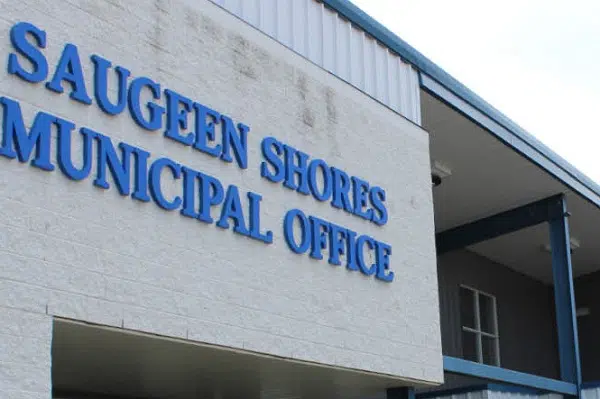
To help inform you about some of the perspectives of candidates running for mayor and council in the upcoming municipal election, Bayshore Broadcasting News sent questions to all those seeking office in municipalities across Grey and Bruce counties.
The questions and responses from Saugeen Shores candidates are available below.
Mayor Candidates
1) Why are you running?
I decided to run for Mayor of this beautiful town of Saugeen Shores, that I have called home and my home away from home for over 60 years. This decision did not come lightly. I know that, if elected, my time will be used extensively in reshaping and refining our municipal structure and administration.
For almost 40 years, I have been involved with the issues affecting Southampton and Saugeen Shores. I have represented the interests of residents of our town in convincing Council to reject development applications that would’ve destroyed our last remaining significant woodland in town.
Contrary to some opinions, I am not opposed to change. I embrace positive change whenever I encounter it. Change for the better is always welcome. Change that results from constructive dialogue with rights holders is at the heart of planning and policy development. This kind of change motivates me, and it motivates others that take the time to be engaged.
I offer a balanced approach to local government; one that listens to its rights holders, undertakes research and analysis, works with fellow Council members and municipal staff to find common interests and work with all to achieve common goals.
2) What current or past experience do you have that you believe applies to municipal governance?
I was a registered, professional land-use Planner for twenty years, having worked for the local school board, local and regional hospitals and health care organizations. I lived in the NWT for four years, working as a Land Officer for the government, preparing the eastern communities for the changes that would result from the land claim settlement. Later, in Yellowknife, I worked in the areas of municipal finance, operations and capital planning; all very rewarding.
In Toronto, I worked with Tarion to develop programs and policies to improve new home construction in the province and reduce the debt of the organization. Later, I worked as a Policy Advisor for a provincial social services organization during the Mike Harris years. In Grey-Bruce, I furthered my planning interests in the public and private sectors, running a planning firm for several years, developing budget planning software for hospitals and working with health service providers in the North Simcoe-Muskoka and later Waterloo-Wellington network regions. I have served as Chair of numerous Working Groups, multi-disciplinary Committees, led budget planning meetings for hospital corporations, developed long-term school accommodation policies and reports, negotiated performance and reporting frameworks for dozens of health service providers with positive results.
3) Why do you believe you will be an effective decision-maker for Saugeen Shores?
With close to 40 years of professional policy and planning experience, I approach all issues in the same manner. I begin by validating the issue. Is it perceived or is it real? Are the claims being made factual or exaggerated? I use my listening, research and analytical skills to validate the issue from the outset. I engage with colleagues, rights holders and subject experts to receive input and advice.
Once validated, a process is planned to collect the data and undertake analysis to present a fully informed plan. Consultation with all rights holders takes place, in which the issue is explained and options are discussed. Proposed options are evaluated through environmental scanning (Who else is doing this? What has been successful elsewhere?) and the process continues. Rights holders are kept informed of new information and are consulted. The goal – always – is to engage and seek consensus by all.
Once a plan is developed, and is costed, it is then implemented in the best, most cost-effective and efficient method possible. Not all solutions cost money; sometimes they come from changes in how processes are undertaken. In all cases, however, the results and performance are measured. The search for improvement continues.
4) What can a municipality do to help address cost of living concerns?
Cost of living and public health & safety should be at the core of every decision made by a municipality. Affordability is a term applied to an individual. That individual may be responsible for other individuals, and so their level of affordability is different from a single individual with no dependants. All individuals must work with the resources that they have to pay for the essential items of life (food, accommodation, clothing, healthcare, childcare (if required), etc.)
In addition, that same individual, in Canada, is the same individual that may pay taxes. Pay federal taxes, provincial taxes and municipal taxes. Affordability is therefore a multi-sector issue. In the municipal sphere, affordability is related to the amount of tax collected (for municipal services), water and wastewater rates as well as the cost of goods and services needed to live and live to some degree of comfort. A municipality must always strive to reduce taxes and service costs for all individuals.
I continue to volunteer at a local food bank. There I have witnessed an increase in families in need. Our municipality can and should help, along with the County of Bruce to provide housing assistance programs, transportation assistance and tax relief.
5) What is your view on the current tax rate in Saugeen Shores?
I believe the tax rate in Saugeen Shores is too high, and, when combined with water and sewer rates & capital contributions, places a heavy burden on many residents in the Town. These municipal costs do affect the overall affordability measurement that is applied to our community. The municipal taxes are directly related to the amount of debt that the Town carries. The current (2025) long-term debt of the Town is over $53.5 Million, and has doubled each year over the past 3 years.
This long-term debt, while not yet having reached the provincial spending limit will be on the books for years. Over 20 new projects/commitments have been announced by the Mayor in the past week. I have asked the Town for details on cost and how they are to be financed. I believe we need to begin to live within our means. We need to work smarter with what we have, defer non-essential projects, oversee current and future projects better and focus more on paying down our debt, not create more.
6) In your opinion, what is the No. 1 issue facing Saugeen Shores?
There are so many issues facing Saugeen Shores. Financial management is perhaps the one issue that will affect our Town for years to come. Council has chosen to borrow from our children’s and grandchildren’s future for infrastructure projects that were not essential and could have been phased in over a period of years.
Long-term debt in this Town is being “managed” with the following assumptions being made: that the growth rate over the next 20 years will be high and sustained, that the average household income will remain high, that Bruce Power will continue to grow and that the Town will experience continued growth from seniors and others relocating to our Town.
Combined, these assumptions should be evaluated for overall risk to the financial stability. This can be done only in a transparent, publicly-engaged system in which two-way communication is encouraged. This is another major issue facing the Town: together, as residents, visitors and Council we need to engage to discuss our future, our needs and wants and work toward a sustainable plan to achieve our goals.
7) A regional transit study is currently being undertaken involving Bruce, Grey, Dufferin and Wellington counties -- what should a regional transit system look like and how should it be funded?
Public transportation will be key to the future of Saugeen Shores. With a focus on developing high priority, low impact fully rehabilitated brownfield sites, which are typically some distance from the downtown core of Port Elgin and Southampton, a modest, four season and fully accessible local transportation system will be required to link our various neighbourhoods into a cohesive community. Savings from the lower cost of development in these areas will be used to offset the costs of the transportation system.
The Bruce – Dufferin – Grey – Wellington Regional Transit Study is a collaborative initiative between Bruce, Dufferin, Grey and Wellington Counties together with Saugeen Mobility and Regional Transit (SMART) to create a unified regional transit network. The transit system should link local hubs in each of the four counties and provide the service on a regular schedule, throughout the year. The study calls for the establishment of Inter-community transit corridors, expanded on-demand service through SMART, integration with existing transit systems and private sector partnerships with taxis and ridesharing providers.
If deemed feasible and sustainable, funding is proposed to be drawn from the federal, provincial and all four county governments in addition to Saugeen Mobility and Regional Transit.
8) How would you address the need to maintain municipal services and infrastructure, without high tax increases for residents?
One of the principle functions of any municipality is to provide its residents with municipal services and infrastructure. A responsible Council is one that does not spend recklessly; but rather, plans for future development with the ratepayer in mind. The long-term debt in Saugeen Shores has doubled each year over the past three years. It now stands at over $53.5 Million. While not close to the provincial spending limit, a trend of spending beyond our means has occurred. Priority should be given to maintaining a healthy and safe municipal infrastructure for all residents. This is a basic requirement, which I intend to maintain.
While we will continue to pay down our debt, discretionary spending will need to be kept to a minimum in the short term if we are to enjoy the lifestyle which we have achieved. Clean water, effective wastewater distribution and treatment, safe roads, appropriate all season maintenance of sidewalks, beaches, parks, recreation areas, green spaces will be delivered by a team of dedicated municipal employees that will respond to queries, provide regular information updates on all municipal matters and will communicate your priorities to Council. I do not plan to increase our tax rate unnecessarily with reckless spending.
9) How can a municipality prepare for the possibility of artificial intelligence data centre developments in the coming years?
While I do not condone the use of Artificial Intelligence (AI), I do understand that the “genie is out of the bottle” and it will be next to impossible to put that genie back. Having said that, Saugeen Shores and Bruce County are smaller municipalities on the provincial scale. Smaller municipalities with relatively smaller data needs. I believe that AI Hyperscale Data Centres, if desired, should be developed with the highest environmental and sound protections available. They should be placed where the need is greatest.
I will want to investigate further the full resource requirements of operating an AI Data Centre (water, electrical, etc.) to determine if the location of such a facility would be a benefit to the region. As a Council, we will need to fully understand the full costs and benefits of locating an AI Data Centre in the Region, and possibly the municipality, so that we can report to the residents of Saugeen Shores the advantages and risks of such technology. Together, we will decide whether this should be an initiative that we can support.
10) What can a municipality do to help increase housing supply across the affordability spectrum?
Affordable and accessible housing should be a priority of Saugeen Shores Council. In achieving this, I would promote the following:
Support cooperative housing and community land trusts;
Use sharedequity and downpayment assistance models where appropriate;
Encourage additional Habitat for Humanity partnerships and builds;
Apply longterm affordability protections, including resale restrictions or other mechanisms where public support helped create the housing;
Use municipal tools for shortterm vacation rentals, including licensing and zoning where legally available, to protect longterm housing supply and neighbourhood quality of life;
Work with employers, senior governments, nonprofit providers and developers to create essentialworker housing;
Avoid treating unrestricted greenfield construction as the only answer to affordability;
Adopt an Inclusionary land use policy that requires a percentage of all non-identified affordable housing development to be constructed, priced, sold/leased and administered as “affordable” for low income and moderate income households;
Continue to work with social service partners (Bruce County Social Services, United Way of Bruce Grey, YMCA of Owen Sound Grey Bruce, CMHA Grey Bruce, etc.), provincial and federal government agencies to explore new, innovative solutions and housing models.
11) Do you support the potential installation of a battery energy storage system in the town, for example like the proposed BESS South of Port Elgin?
The recent discussion of a possible installation of a battery energy storage system (BESS) has resulted in much concern by residents in Saugeen Shores. Two open house events, hosted by the proponent, Neoen Canada, have tried to allay fears of catastrophic incidents occurring in the 20 year timespan proposed.
The evidence of thermal runaway and spontaneous combustion of Moss Landing, California (January 2025), Victorian Big Battery, Geelong, Australia (July 2021), Warwick, New York (June 2023), La Verne, California (September 2026), Otay Mesa, California (September 2024), East Hampton, New York (May 2023) and others would suggest that the technology is far from being safe and problem-free.
My foundational platform is to protect the health and safety of the residents of Saugeen Shores. With a BESS located on Highway 21, several kilometers from the closest Fire Hall, emergency response times would be significantly longer than ideal, especially during winter storm conditions in which the Highway is often closed.
On the basis of this, I would recommend that an alternative location, perhaps closer to Bruce Power, with trained full-time professional emergency crews would be better able to respond to such incidents. This is not a technology that would benefit our residents.
12) Do you support a Community Planning Permit System? If so, in what area of town? Why or why not?
No, I do not support the introduction of a Community Planning Permit System (CPPS) in Saugeen Shores. Of the 444 municipalities in the Ontario, just over a dozen have adopted a CPPS. The vast majority including all larger Cities and Towns, have chosen to continue to use the tried, tested and proven planning tools of Official Plans, Secondary Plans, Zoning ByLaws, site plan approvals and minor variances. These legal documents were created through extensive dialogue with fulsome public input. They work to control development in an effective, democratic manner.
A CPPS has, at its base, the premise that only “Class 3” type development applications (i.e. those that include substantial variations or a complete departure from established development standards) are addressed by Council. The vast majority of applications would be handled by Planning staff, with no opportunity for Council or public input or discussion. This would represent a significant departure from the democratic planning process that is currently in use.
A CPPS, if adopted, would replace the terms and conditions of the current planning mechanisms (Official Plan, Zoning ByLaw, etc.), providing a more streamlined process for development in the subject areas; wholesale development that would not be desired by the community.
1) Why are you running?
I am the fourth generation descendent of a family in Saugeen Shores that always had a strong interest in politics and justice. Having been a family that struggled financially, I shared that political interest especially in the area of social mobility and truly believe it should be our talents and efforts that dictate our station in life and not our access to resources or postal code. My sister and I were strongly encouraged into higher education and to pursue self expression, knowledge and compassion for everyone within our community. I have a great love of this Ontario Wonderland and paradise but I have noticed a trend in the conversations around me. The community seems to have moved away from celebration and pride toward a feeling of antagonism and feeling unseen. I am finally in a position that affords me the time and resources to pursue my lifelong interest in governance. I want to do whatever I can to rebuild our positive feelings of community. That is my main purpose and the reason for my candidacy.
2) What current or past experience do you have that you believe applies to municipal governance?
The municipal act is written to protect you the tax payer. Council’s role is to provide broad policy direction to the town staff. Council is elected, they are not vetted, interviewed, reference-checked and hired by professionals. Council is there to serve at your will and act as a governor to the hard working people who actually run things. In a mayor, I believe you want someone who is by nature objective in their views, seeks information and professional expertise towards informing the tax payer in order to serve your informed will. I believe you want someone who is versatile and has a broad range of interests. Someone who isn’t afraid to think outside the system and synthesizes information towards a larger picture of the regional landscape. My whole life, people who know me well have encouraged me to pursue this role because I am those things. My history is here and you cannot teach that. I am highly educated in all the relevant disciplines, I am a professional and an entrepreneur in business. I am interested in everything and I have almost every hobby. I am dedicated to serving at the municipal level but I also hope to make you proud of me as your voice in the the larger region.
3) Why do you believe you will be an effective decision-maker for Saugeen Shores?
Given the role of Mayor and the role of Council I firmly believe that decision making must come from a place of willingness to serve the will of the taxpayer. This is my greatest strength as a candidate. I do not start from a ‘No’ or from a ‘Yes’ but instead I start from a place of interest. Even when we completely disagree with someone there is always something within their position of importance to the larger understanding of an issue. I rarely even form opinions and when I do, I can easily change my mind and that is because I do not self identify with my thoughts. I believe the community should look for a Mayor that embodies an objective and well informed approach to complex issues. A person who instead of trying to find a position to take, actually tries to understand the issues in relation to the larger political landscape. Most of all, I believe that you should all be looking carefully for that candidate who has kindness in their heart. That should be the focus of your attention in who you decide should be your mayor: objectivity, integrity, versatility and kindness.
4) What can a municipality do to help address cost of living concerns?
I grew up and spent most of my life living with the anxiety that comes with struggling to make rent. I have also found success later in life and understand the concern for where those tax dollars are going and worry about wasting peoples hard earned money. Unfortunately a municipality cannot control global inflation, but it can offer targeted relief and advocate for residents in ways that make a difference. Other municipalities offer property tax deferrals for low-income seniors and people with disabilities, or water bill rebate programs that reduce utility costs for those who qualify. I am always interested in ways to lower the cost of living not only for those who struggle but also so that those doing well can add more money into our economy and promote our local businesses. We cannot talk about cost of living without talking about housing. The town can expand supply and affordable housing options by supporting the right houses for the right market at the right time. Council can also advocate for provincial and federal relief. Many cost-of-living drivers fall outside municipal control, but the Town can push for equitable rural funding, transit subsidies, and programs that reduce development charges.
5) What is your view on the current tax rate in Saugeen Shores?
I understand that every tax bill matters, and it’s fair to ask how our rate compares to what others are paying. The reality is that Saugeen Shores has one of the highest property tax burdens in the province and that is something we need to acknowledge honestly. Saugeen Shores has a high demand for services like police, fire, roads, water, recreation but we have a smaller commercial and industrial tax base than other communities to spread the cost across. The result is that residential ratepayers carry a heavier share. My commitment is to keep looking for ways to deliver the services we need without asking more from the people who are already stretched. That means finding efficiencies, pursuing growth that pays for itself, and being honest about the trade-offs.
6) In your opinion, what is the No. 1 issue facing Saugeen Shores?
Growth. Bruce Power is giving us the gift of prosperity but they are also giving us the challenge to absorb that growth properly. Like everyone else here I have the same nostalgia for a younger version of our place in the world but I also have a deep respect and appreciation for the prosperity and opportunity afforded to us through Nuclear Power generation. We are already 10 years behind on healthcare and need to attract doctors, investment and long term care facilities that match not only our current situation but scaled to growth. In preparation for growth we need to protect your property values by building the right homes for the right people at the right time. Over the last 40 years homes have become financial vehicles instead of places to live and we need to bring back the starter home or that system breaks under pressure. The challenge is to integrate different types of homes throughout the community or else you have created generational problems around stigma and social mobility. I grew up without money but I had friends with a swimming pool and down-riggers on their boat. That is what building community actually looks like.
7) A regional transit study is currently being undertaken involving Bruce, Grey, Dufferin and Wellington counties -- what should a regional transit system look like and how should it be funded?
I hear this question a lot, and I understand why. The lack of transit is limiting our ability to expand tourism and provide the movement of people for dozens of important reasons. Without your own working vehicle and the ability to use it there is no way to come or go from our community. That’s not right, and it’s something we can fix. A regional transit system should run between towns like Saugeen Shores to Owen Sound and Walkerton and so on. This should be scheduled for user needs and reliable. The system should connect with the buses that already exist. It should reach the smaller communities that have nothing right now, maybe through alternatives and not just big empty buses. The province doubled a rural transit fund to $10 million a year for three years . There’s gas tax money that flows to municipalities and the federal government has a rural transit fund that helped pay for this study. I would work with other communities to adopt a central taxi and insurance policy so that we can attract ride sharing companies to the area. This work is overdue and should be a priority.
8) How would you address the need to maintain municipal services and infrastructure, without high tax increases for residents?
I hear the worry that comes with every tax bill. A growing town needs constant investment, but there are real, practical ways to keep services running without asking you for huge increases. The municipality can make growth pay for growth. Development charges are fees collected from new construction to cover roads, water, and sewers. Over the next decade, Saugeen Shores expects roughly $42 million in development charge revenue to fund the infrastructure that new subdivisions require. We can aggressively chase upper level government funding instead of letting our tax bills rise. Saugeen Shores recently secured an $18 million provincial grant for the Southampton Water Pollution Control Plant upgrade money that eliminated $10 million in debt the Town would have otherwise carried. Saugeen Shores is in a great financial position. All municipalities use long term debt to pay for generational investments in infrastructure. That is sound financial management so that the taxpayer today doesn’t get stuck with the future cost of future users. The reality is that a growing town needs ongoing investment. But the goal is to make growth pay its share, chase every grant dollar, and keep any increase as low and as predictable as possible.
9) How can a municipality prepare for the possibility of artificial intelligence data centre developments in the coming years?
I understand the instinct to say yes to investment and jobs, but data centres are a new kind of industrial facility. An AI data centre can consume as much electricity as 100,000 homes and millions of litres of water for cooling. Those are resources shared with every resident and business in Saugeen Shores. Other Ontario municipalities have responded by using an interim control by-law, a planning tool that pauses development while staff study the real impacts. The province is also developing a Data Centre Playbook that would require operators to cover their full electricity costs and meet water and noise standards. My approach would be to direct staff to prepare a data centre assessment framework covering electricity capacity, water and wastewater servicing, noise, land use compatibility, and community benefit requirements before any application is considered. We should align with the provincial framework where it protects ratepayers, and use our local planning powers to ensure that if a data centre comes to Saugeen Shores, it pays its own way. In the longer term, the strongest protection is partnership. A real relationship with Saugeen Ojibway Nation on healthcare, economic development, and shared priorities creates a regional voice the province cannot ignore. A united Saugeen Shores and SON changes the political calculus for any project that comes our way.
10) What can a municipality do to help increase housing supply across the affordability spectrum?
I understand the worry that comes with being priced out of the town you love, and the deeper fear that we’re building two separate worlds, one for people who can afford a home and one for people who can’t. How we build housing shapes the entire culture of a community. Saugeen Shores is already using federal Housing Accelerator funding for eight initiatives to get more homes built. We’ve allowed triplexes and fourplexes in most residential zones, reduced parking requirements, and permitted more Additional Residential Units. We’re creating Ready-to-Build designs and a Community Improvement Plan that offers grants for basement apartments and missing middle housing. We need the right homes at the right time, mixed throughout the community and not concentrated in one area. Research shows that placing affordable units next to market units does not create connection. But it does create access to better schools, safer streets, and opportunity. Everyone benefits when we stop warehousing poverty. That means bringing back the starter home, supporting non-profit housing, and using surplus land for working families. It means a child from a modest or wealthy home on the same hockey team, in the same classroom, seeing each other as neighbours. When I was a child I didn’t even know we were struggling. I never thought for a moment that I didn’t belong here.
11) Do you support the potential installation of a battery energy storage system in the town, for example like the proposed BESS South of Port Elgin?
If it is the informed will of the people to stop this project, then my job as mayor would be to stop it. That is how I see the role. The pros and cons should be known and explored to inform that will, and my personal opinion would be of little consequence. Council could withhold the Municipal Support Confirmation the project needs by passing a specific by-law to set mandatory pre-consultation, 300-metre setbacks, lot coverage limits, and other requirements that limit any battery storage proposal. Other strategies include refusing the Municipal Support outright due to insufficient time for proper review, opting into Bruce County’s collaborative review process requiring an Agricultural Impact Assessment for prime farmland, and building a legal case based on inconsistency with the Provincial Policy Statement through citing floodplain hazards, unresolved Saugeen Ojibway Nation consultation, and environmental impacts. The strongest defence is not procedural but political. If Saugeen Shores and Saugeen Ojibway Nation stand together, the province faces a harder choice. SON has court-recognized rights across this territory, and the Crown has a constitutional duty to consult them. The province has already honoured SON’s veto on nuclear waste. A united front of Saugeen Shores and SON is the most powerful position we can take, and it’s how we build lasting regional power.
12) Do you support a Community Planning Permit System? If so, in what area of town? Why or why not?
I hear the worry that we’re handing out breaks to developers without getting affordability. I hear the concern that Council and therefore the people will lose oversight and no longer control the look and feel of our community. A Permit System is a tool that depends entirely on how you use it. Yes, I support a CPPS but only if it actually gives us more control and is used to protect heritage and streetscape character through clear design standards and should not be expanded town-wide until we see how it works in the cores. Let’s not forget that these areas are already developed so new development is minimal. The intent is to streamline administration into a single 45-day process . That’s a real benefit when done right. The strongest argument for a CPPS is that it can attach conditions to approvals like tree replacement, affordable housing and public benefits. The system is not ready to be passed but spreading fearful messages to the public alienates our town staff, ties up Council’s focus on healthcare and transportation while lowering our ability to attract high quality development with the added major problem of cutting off access to upper level government grants and incentives.
1) Why are you running?
I believe that Saugeen Shores is entering one of the most consequential periods in our history. The decisions we make over the next four years will shape the community for decades to come.
In recent years, we have completed significant projects like the Lamont Sports Park and the Pryde Aquatics and Wellness Centre. We have also developed a detailed, ten-year plan for the town’s infrastructure, services and future growth.
I am running to deliver on that plan.
We have amazing opportunities before us. New nuclear could generate as much as $2 billion annually in regional economic activity, benefitting our residents and businesses for decades to come. We need to prepare to seize that opportunity and work to win Bruce C for our region.
Our plan is to leverage our growth and success in a way that makes life better for everyone who calls Saugeen Shores home. I have the experience and the relationships to bring people together in a collaborative effort to turn that plan into results.
2) What current or past experience do you have that you believe applies to municipal governance?
I have twenty years of experience in municipal government.
I was first elected in 2006 and have served as Councillor, Deputy Mayor, Mayor and as Warden of Bruce County. I have also held a number of regional leadership positions including, Chair of the Saugeen Valley Conservation Authority, Chair of the Bruce County Library Board and Chair of Westario Power.
I am a local farmer and small business owner. My wife Alison and I own Hi-Berry Farm – a roadside, fruit and vegetable market in Saugeen Shores.
Over the years I have worked closely with neighbouring municipalities, First Nations leaders, provincial ministries and our federal representatives. I have also built extensive connections with local volunteer organizations and community partners.
My 20 years of experience in municipal government, my experience as a local business owner and my broad connections throughout the region and beyond have prepared me well to continue to lead the municipality during the critical four years ahead.
3) Why do you believe you will be an effective decision-maker for Saugeen Shores?
As noted, I have a great deal of experience in business and municipal government.
The skill that I bring to my work is the ability to facilitate collaboration. On Council, Boards and Committees, I have consistently created space for differing perspectives and managed difficult conversations. My motivation has always been to unite decision makers and community members to advance decisions that are in interest of our community and region.
I have significant experience in working productively with regional leaders from a variety of partner organizations. My efforts, in this respect, have always been intended to advance the interest of our community in a way that creates mutual benefit for our region and our partners.
The mayor’s job is also to be the community’s representative at home and across our region and province. I have done my best to represent our community with energy, dignity, integrity and pride. I will continue to do so if I am returned to office.
4) What can a municipality do to help address cost of living concerns?
The best way for the municipality to impact the cost of living is to focus on the costs and services that are within municipal control.
Our approach is to use long-term planning to avoid the kind of last-minute decisions that increase municipal costs and drive-up taxes and utility rates. Long-term planning also enables us to effectively pursue grants to offset infrastructure costs. This approach has already unlocked millions in provincial infrastructure funding and reduced the burden on property taxes and utility fees.
We will continue to collect development charges so that ‘growth pays for growth’ ensuring that taxpayers do not need to cover the infrastructure costs associated with growth. We will also negotiate a community benefit agreement with Bruce Power to offset any municipal costs related to Bruce C.
Our plan also includes increasing the supply of housing across the spectrum of affordability. We plan to build as many as 200 affordable homes during the next term of Council. And we will encourage the construction of an appropriate range and mix of housing to meet the needs of our current and future residents whatever their financial sitation.
We will also support local businesses and economic development efforts to ensure our community continues to have stable, good-paying jobs.
5) What is your view on the current tax rate in Saugeen Shores?
Independent studies show that Saugeen Shores’ property tax rates have consistently been in the low to medium range as compared to similar sized municipalities in Ontario.
With that in mind, we well understand that property taxes are a burden for many in our community, particularly as the cost of living continues to rise.
Municipalities across the province have been heavily impacted by the rising cost of goods and services as well as the need to fully fund the lifecycle costs of our infrastructure. As costs rise, the Saugeen Shores has been working to mitigate the impact on property taxpayers.
We are doing that through long-term planning; controlling costs by coordinating projects, maintaining our assets and avoiding emergency expenditures. We are using grants, development charges, reserves and debt financing appropriately instead of placing every cost on current taxpayers. The objective is responsible, predictable taxation – not artificially low rates that create an infrastructure deficit or put community services at risk.
Considering the broad range of municipal services that are supported by local property taxes, I believe that residents are getting good value for their money. We will continue to expend every effort to enhance that value and get more for every tax dollar we receive.
6) In your opinion, what is the No. 1 issue facing Saugeen Shores?
Ensuring that we seize the opportunities before us while managing growth in a way that improves quality of life for everyone.
The potential for new nuclear construction makes the next four years particularly consequential. We must work with our regional partners to win that opportunity for our region while preparing our community to benefit from it.
We have a long-term plan to make the required investments in our infrastructure and services. We need experienced leadership to coordinate our efforts with First Nations, industry and government partners.
We have already demonstrated that we can leverage our growth to create benefits for everyone; the Lamont Sports Park, Pryde Centre and other infrastructure upgrades are examples of that. I am best positioned to continue that work and help build a stronger, more prosperous community for the decades to come.
7) A regional transit study is currently being undertaken involving Bruce, Grey, Dufferin and Wellington counties -- what should a regional transit system look like and how should it be funded?
In my role as Warden of Bruce County, I have been part of the effort to develop a unified, regional transit network.
The proposed model combines scheduled fixed routes (connecting Southampton and Port Elgin to each other and the broader region) with on-demand service connecting people to those routes and, potentially, other local destinations. This service will be dependable, affordable and accessible.
Fares are proposed to start at approximately $10 for travel on the fixed routes. This system could begin implementation in July of next year, subject to approval by the County and its partners. I intend to support this plan, if I am retuned to office.
Funding from the Province of Ontario has made this project possible. County contributions and passenger fares are projected to cover the remaining costs. There is also the possibility to expand the fixed routes and on demand services with financial support from the Counties or from partner agencies like the Town of Saugeen Shores.
Transit is needed to support our economy, and it is a necessary social service. I am pleased that we now have this plan to start delivering real transit in our community and across our region.
8) How would you address the need to maintain municipal services and infrastructure, without high tax increases for residents?
By implementing the Town’s ten-year operating and capital plan.
Our plan maintains our assets throughout their useful lives and ensures we are replacing them before they fail, creating costly emergencies. It coordinates projects and stages them in a way that saves money and enhances opportunities to receive grants to support the work.
In this way, we have unlocked tens of millions of dollars in provincial and federal grants in recent years. This funding directly reduces the amount that local property taxpayers will need to spend to maintain our infrastructure.
Our plan makes infrastructure investments predictable, allowing us to use development charges to ensure that ‘growth pays for growth’ while responsibly leveraging our reserves and targeted borrowing to smooth out infrastructure expenses over time. This approach carefully protects current taxpayers from bearing the full burden of major infrastructure while protecting our capacity to fund future priorities.
9) How can a municipality prepare for the possibility of artificial intelligence data centre developments in the coming years?
There are no data centers currently proposed for Saugeen Shores.
This puts us in the position of being able to begin planning before an application is received.
Data centers place significant demands on electricity, water, wastewater, land, roads and emergency services. It’s necessary to identify suitable lands, where infrastructure can support the development and where sensitive uses like agriculture and natural environments are not negatively impacted.
It will be also necessary for the municipality to ensure that any proponent has appropriate plans in place to meet electricity and water demands, emergency response and fire protection requirements, zoning, design, noise and environmental expectations.
Regional coordination will be essential because electricity and infrastructure demands cross municipal boundaries. The Town will need to work closely with Bruce County, neighboring municipalities, Hydro One, Westario Power and provincial agencies to ensure that any future data centers are proposed in suitable locations. My experience as Mayor, Warden and Chair of Westario Power has prepared me to lead that work.
10) What can a municipality do to help increase housing supply across the affordability spectrum?
We want Saugeen Shores to be a place were anyone who wants to can find a place to live.
In recent years, the town has taken several steps to encourage the construction of additional dwelling units, apartments, townhouses and affordable housing.
Targeted development charge reductions have been particularly effective. These policies have helped to double the number of purpose-built rentals in our community over the last few years. We have applied to the federal-provincial Development Charges Reduction Program to enable us to continue development charge incentives in a way that will not impact local property taxpayers.
Going forward, we will use a combination of Town owned lands and federal funding to advance the construction of nearly 200 affordable homes. We will also use our Community Improvement Plan to deliver funds received through the federal Housing Accelerator Fund to incentivise the construction of needed housing across the community and to explore the potential development of underutilized properties, like brownfields.
Through long-term planning, we have been able to unlock provincial funding that is supporting needed expansions to our water, wastewater and roads systems. These investments enable housing construction and ensure that we can continue to provide high-quality services to existing residents.
Housing shortages are a national issue, municipalities cannot solve it alone, but I believe that we have a good plan and the necessary tools to make a significant difference in Saugeen Shores.
11) Do you support the potential installation of a battery energy storage system in the town, for example like the proposed BESS South of Port Elgin?
NEOEN currently has a planning application before the Town looking for the necessary approvals to construct the battery energy storage system referenced in the question.
When a planning application is being considered, it is necessary for Council Members to reserve their opinions until after we have heard from our professional planners, the proponent and members of the public. If I am returned to office, it will be my responsibility to lead that process, as Mayor. With that in mind, I will refrain from expressing support or opposition to the proposed BESS at this time.
In general, it is necessary for Council and its planners to assess any proposed BESS on factors like its location, safety, environmental effects and impact on sensitive neighbouring land uses like agriculture. A robust and transparent public planning process will ensure that those factors are appropriately considered and that decisions are made in the public interest.
12) Do you support a Community Planning Permit System? If so, in what area of town? Why or why not?
I do not support the Community Permit Planning system as it is currently proposed.
I am open to exploring regulatory reform that will reduce red tape and make it easier to build an appropriate range and mix of housing for our growing population.
The CPPS would be a major change to planning system combining zoning, minor variance and site plan control into a single process. While that would create greater predictability, faster decisions and fewer repetitive approvals, it is still unclear how it would enable or incentivise the construction of needed housing as currently proposed. The focus on the municipality’s downtowns, rather than on its residential zones, is particularly problematic in that regard.
I think it will be necessary to re-evaluate this proposed system to ensure that it is focused on achieving the municipality’s housing goals.
Deputy Mayor Candidates
1) Why are you running?
I’ve served the residents of Saugeen Shores on our Council for four terms, elected by voters who, like me, are living through our community growing and changing rapidly. I’ve worked hard to understand challenges, opportunities, needs and wants to move Saugeen Shores forward in a positive direction. I’ve never taken for granted the trust voters put in me. I believe we must respect how the community has developed historically and what we are today ahead of making Council decisions with the intent to enhance this legacy going forward. I believe we deserve to have a community that values small town charm and the potential for residents to enjoy a lifetime of good experiences throughout all stages of their lives. The decisions made during the next term will impact daily life, the level of property taxation needed and, most significantly, the future of Saugeen Shores. I have been a very active participant during Council meetings, public engagement events, community activities and committee responsibilities. Voters tell me that my voice and vote contribute in meaningful and important ways. I have the time, the energy, the dedication and the passion to continue to be our Deputy Mayor. That’s why I’m running again.
2) What current or past experience do you have that you believe applies to municipal governance?
Education: Honours Bachelor of Public Administration; Master of Arts in Political Science (municipal focus); and partial completion of Master of Education – administration. Completion of AMCTO (Association of Municipal Clerks and Treasurers of Ontario) courses. Past provincial involvement: Ontario Universities’ Standing Committee on Secondary School Liaison (Chair). Governance roles: ten year member, University of Windsor Board of Governors; twenty-year board member, Iona College (United Church affiliated institution at the U of W); Southampton Ward Councillor (two terms); Saugeen Shores Vice- Deputy Mayor; and, current Deputy Mayor. Past committee membership: Municipal Heritage (past Chair), SMART transit, Saugeen Valley Conservation Authority, citizen member Planning Advisory Committee, Waterfront Ad Hoc, Environmental Ad-Hoc. Current Committees: Southwestern Ontario Isotope Coalition, Committee of Adjustment (Chair), Accessibility Advisory Committee (Chair), Cenotaph Ad-Hoc, Southampton Town Hall and Library Ad-Hoc, Port Elgin BIA Board, Emergency Preparedness Team and Saugeen Shores Police Service Board (Chair). Work experience: twenty-year career in university marketing and admissions – Secondary School Liaison Officer and Assistant Registrar- Admissions. During this term I have attended County Council meetings and chaired Saugeen Shores Council meetings when the Mayor is unable to attend or needs to recuse himself from agenda items.
3) Why do you believe you will be an effective decision-maker for Saugeen Shores?
My career in university marketing and admissions provided a range of diverse communications and assessment experiences. Gathering information, presenting information, receiving further information and managing all this information to effectively achieve public relations and recruitment goals provided great training regarding the necessity of considering a range of factors and perspectives. As a member of our Council, I have attended as many public engagement events as I am able which enables me to hear what the public is asking and interested in as well as further my own understanding of projects. I genuinely respect the passion that is often evident at these events as residents consider municipal actions that will impact their neighbourhoods and more generally our community. These voices, their opinions and, often, their quite valid concerns always informed my own instincts as I read and review reports (and other relevant materials) ahead of items being discussed during Council meetings. In four terms of elected service I think I’ve only missed, maybe, seven or eight Council meetings. I understand the commitment the job of Deputy Mayor requires. I take my role very seriously and am prepared to work hard and participate fully during another term if elected again.
4) What can a municipality do to help address cost of living concerns?
We all benefit when Council is diligent during the annual Budget process with assessing existing programs and services and considering emerging needs and community requests. Sometimes we need to say no. To influence the property tax rate in a responsible way Council considers both expenditures and revenue. We need to actively pursue all potential revenue sources beyond property taxes always considering the impact certain fees will have local users. Everyone living or working here deserves a healthy and safe community with access to recreational and cultural opportunities. Where possible, we can consider opportunities for residents to access fee assistance toward recreational programs. Saugeen Shores has the ability to encourage the creation of affordable and attainable housing – during the current term a significant number of purpose-built rental units have been created which has impacted rental rates slightly. We should convince developers and encourage individuals to build smaller detached dwellings, more senior-friendly housing, appropriately scaled in-fill structures and collaborative housing opportunities. Council must explore more than purpose-built high rise apartment buildings as we push for solutions to our housing needs and with making housing more affordable.
5) What is your view on the current tax rate in Saugeen Shores?
Our tax rate reflects a budget process and diligence by Council and Saugeen Shores staff to maintain necessary core services including recreation and park spaces while considering other opportunities. The tax rate also includes a contribution toward the Legacy Fund, a fund that simultaneously pays down debt associated with the Lamont Sports Park and the Aquatics and Wellness Centre and puts dollars into a reserve toward future projects such as accessibility and functional renovations to the Southampton Library and Town Hall. Of course, I would like the tax rate to be lower, but I believe our community expects a level of service and facilities that require a certain level of funding and staffing. As a member of Council, I try to balance operational and capital needs with opportunities to improve the quality of life here through municipal funding and actions. Our tax rate supports infrastructure and facilities that make this community a good place to live and work in. I will add that the tax rate does not includes water and wastewater funding requirements as these are contained within a separate budget process that considers expenditures and revenues from a user perspective rather than a community – wide property tax perspective.
6) In your opinion, what is the No. 1 issue facing Saugeen Shores?
Balancing needs with wants and nice-to-haves with respect to tax rates, public requests, resident satisfaction and infrastructure integrity is critical to Saugeen Shores moving forward. As we grow and change, I would like to see an annual scorecard created that goes beyond the value of building permits issued to include markers for the completion of diverse housing types, environmental attention, sustainability initiatives, improvements and additions to public amenities (sidewalks, parks, sidewalks, street trees, etc.) and other civic actions of importance to residents. Municipal support for healthy and vibrant downtowns as well as appealing streetscapes everywhere in Saugeen Shores will give us a chance to hold onto a desirable small-town character as growth spreads out over wide areas. We need to put pressure on the provincial government to fund the healthcare and education spaces we need for the population here. As we add more buildings and roads to the community, we need to be vigilant about maintaining a people – focussed quality of life with pedestrian and cycling routes along with beautiful streetscapes, parks and greenspaces. Ultimately, we need to value, respect and protect what is already good here and ensure that growth and change enhance that legacy.
7) A regional transit study is currently being undertaken involving Bruce, Grey, Dufferin and Wellington counties -- what should a regional transit system look like and how should it be funded?
The joint regional transit plan has recently been released. The anticipated start date is July 2027. For us, this is a County-led transit project and strategy which has tremendous potential for reasonably priced four times a day travel along a route from Kincardine to Collingwood with connections through Owen Sound to Guelph (GO trains) and Orangeville (GO buses). Beyond the fixed route mapping the plan involves on-demand opportunities from bus stops to a destination (i.e. the Owen Sound hospital) or generally within a community too. Seasonally, additional travel would be possible on a route from Lions Head through Sauble Beach to Southampton and Saugeen First Nation. The Plan also includes the continuation of the current on-demand SMART transit that has been available here for a number of years. There’s a lot of potential in this plan with significant provincial funding impacting the first five years after which user revenue and County tax funding (which does includes $ from Saugeen Shores taxpayers) will support the operations fully. Saugeen Shores taxpayers have contributed to SMART transit, and I do think this will remain a separate, but connected, service. The transit report, including financial information regarding planned fees and costs can be found on the County of Bruce website
8) How would you address the need to maintain municipal services and infrastructure, without high tax increases for residents?
The Town of Saugeen Shores Council has adopted a multi-year capital plan and an asset plan. These plans regularly reviewed provide a solid basis for longer term planning enabling the timelines for both maintenance activities and asset replacement/renewal to be scheduled and effectively managed as to when/how expenditures can be addressed over a long-time frame. Ensuring regular maintenance through an asset management program and attention, when necessary, to repairs ensures a high level of awareness of the condition of municipal assets. On-going attention also means that we are able to have reports and studies available to take advantage of provincial or other grant program opportunities as they arise. As assets age or need replacement Council is able to use the multi-year planning tools to address funding needs and consider how to phase work or purchasing if it’s a significant expense. Council is able to fund, and encourage, regular training to maintain compliance with operating standards and also to enable staff to upgrade and enhance their skills to meet emerging needs and provide them with personal professional growth opportunities.
9) How can a municipality prepare for the possibility of artificial intelligence data centre developments in the coming years?
My understanding of what an AI data centre development would require in terms of land mass, zoning, infrastructure, resources and servicing is limited at present. Council can ask staff to prepare a report providing relevant sector information, the regulatory framework, provincial priorities and local guidance concerning the future possibility of this kind of development. I would suspect the land mass required may make this a possibility outside of the settlement areas within the geographic area of Saugeen Shores. Understanding that, we should be aware of any background or needs assessment that Bruce County has prepared or is planning to prepare. The County has authority over lands outside the two Saugeen Shores settlement areas which would play a role in the possibility of a development. I’m not sure if we can, or how we can, update our zoning by-laws in ways that relate to this kind of development. A staff report would help Council understand our options in that regard. We can also continually enhance our public engagement opportunities so that we’re ready to gather public input regarding this type of development.
10) What can a municipality do to help increase housing supply across the affordability spectrum?
I would like Saugeen Shores to have a high level of market trends, public demand and current housing availability intelligence so our planning staff can proactively use or activate the limited tools available to encourage investment in housing. Vibrant and up-to-date information on our website and through promotions along with assistance enabling a developer or individual to successfully navigate available incentives along with zoning, permit and development requirements has the potential get units built faster. Assessing the supply of vacant lands and engaging property owners in discussion concerning housing approved but not under construction and potential future considerations lets the municipality work with the private sector to address local needs by encouraging desirable housing (i.e. suitable for seniors or tiny homes) and to expedite the timeline for units to be available. We can enable reduced lot sizes and DC exemptions to provide for smaller detached construction. There may be public land that can be declared surplus and then sold or leased to meet specific housing needs. We can encourage Bruce County Housing to build here and pursue partnerships with developers or agencies that have proven track records related to providing affordable housing units.
11) Do you support the potential installation of a battery energy storage system in the town, for example like the proposed BESS South of Port Elgin?
There is an active planning application related to the proposed battery storage facility within Saugeen Shores. This application will involve both the County of Bruce Council and Saugeen Shores Council as it works through a prescribed provincial planning process, including public meetings. As a current member of Council, I understand how the process works and the significance of knowing my role within that process so as not to inadvertently create a potential appeal or legal costs down the road because of comments made outside of the formal process that could be construed as bias ahead of decision-making. I have attended both of the public information sessions held in our community with an interest to hearing about the potential project and, if elected, I intend to participate responsibly when the Zoning change application is before our Council for consideration.
12) Do you support a Community Planning Permit System? If so, in what area of town? Why or why not?
Provincial priorities have impacted the tools municipalities have to manage change in their communities – one still available is a CPPS. We have to know the goal – if it’s creating housing, what does that look like? If missing middle housing is the intention, we should look outside of downtowns and established neighbourhoods to areas with potential for “new” neighbourhoods or where in-fill vacant or appropriately sized lots provide opportunity without the destruction or significant alteration of existing structures. If it’s the preservation of character, we need to have the public engagement and decision-making to define what we mean by character to enable meaningful and actionable content for that purpose. It’s important to consider what has the potential to work to realize the goal and that will guide where it could be implemented to have the greatest opportunity for property owners to use the tool. I don’t support the CPPS that was before Council. I do think that as an option that lets us influence and control development within our community that we should give it a second look, determine desired goals and craft a CPPS for Council’s consideration that is focussed, detailed and sited appropriately for success.
1) Why are you running?
I’m running for Deputy Mayor because I want to contribute to a caring and sustainable future for Saugeen Shores. Managing significant growth means protecting what we value, especially our natural heritage, while ensuring that housing, infrastructure, health care, recreation, schools and municipal services keep pace with change.
While health care and education generally fall under provincial jurisdiction, municipalities and local organizations can still support initiatives that help ensure services respond to growing local needs.
I am also running because I bring extensive experience in public leadership across a wide range of roles and communities. I believe that experience can broaden the perspectives considered in municipal decision-making and help Saugeen Shores plan thoughtfully for a caring and sustainable future.
2) What current or past experience do you have that you believe applies to municipal governance?
I bring more than 30 years of professional leadership experience in public education, including roles as teacher, principal, superintendent and director of education, as well as work with the Ontario Ministry of Education. I also led representatives from four school boards and three police services in developing a Police-School Board Protocol that became a provincial model.
Municipally, I served as Deputy Mayor of The Blue Mountains and as a member of Grey County Council, participating on numerous municipal and county committees at both lower- and upper-tier government. Since moving to Saugeen Shores seven years ago, I have served on two municipal environmental committees.
My community experience includes chairing a public library board, volunteering with Victim Services Bruce Grey, serving on the board of Big Brothers Big Sisters, and serving for the past four years as President of CFUW Southport.
These roles required skills directly applicable to municipal government: reviewing complex information, managing budgets, understanding legislation, working with staff and the public, listening to different perspectives and making decisions in the public interest.
Additional qualifications and experience: electodette.ca/#about
3) Why do you believe you will be an effective decision-maker for Saugeen Shores?
My approach to decision-making is to do the research, gather the facts, ask questions, listen to residents and staff, consider both immediate and long-term impacts, and then make a decision I can explain publicly.
My previous municipal and professional leadership roles required decisions involving budgets, policy, staffing, public accountability and competing priorities. They also taught me the importance of distinguishing between what is urgent and what is important.
Good municipal decision-making does not mean simply saying yes or no quickly. It means understanding the evidence, identifying risks and alternatives, and considering how a decision affects taxpayers, neighbourhoods and future generations.
Saugeen Shores is experiencing significant and rapid growth, which makes careful decision-making especially important. I would bring an experienced, collaborative and evidence-based approach to Council.
4) What can a municipality do to help address cost of living concerns?
Municipalities cannot control grocery prices, interest rates or many other household costs, but they can influence property taxes, water and wastewater bills, user fees, housing supply, transportation and the cost of delivering local services.
The first responsibility is disciplined budgeting: reviewing programs, identifying efficiencies, setting priorities and avoiding unnecessary costs. Saugeen Shores’ 2026 budget resulted in an estimated 3.82% combined
blended tax-rate increase. The newly elected Council will have significant work to do immediately on the next municipal budget.
Housing is equally important. Municipalities can streamline approvals, encourage a broader mix of housing types, support secondary units and infill, and use tools such as Community Improvement Plans where they produce measurable public benefit.
Regional transportation and access to services also affect household costs, particularly for seniors, young people and lower-income residents. Bruce County is participating in the Bruce-Dufferin-Grey-Wellington Regional Transportation Study, and I will be watching closely for its recommendations and implications for Saugeen Shores.
5) What is your view on the current tax rate in Saugeen Shores?
Property taxes — along with water and wastewater bills — are among the issues I hear about most often during this campaign. They must be considered in the context of both affordability and the services residents expect.
For 2026, the Town’s final budget produced an estimated combined blended tax-rate increase of 3.82%. Council also transferred $470,000 from the Tax Stabilization Reserve to reduce the proposed municipal tax increase, excluding police, from 2.2% to 0.6%.
Canadians are also facing economic uncertainty arising from the international economic and political climate. Council must take that into account when making fiscally responsible and sustainable decisions.
As we do in our own households, Council must continually look for efficiencies and distinguish between essential services, necessary infrastructure investment and spending that can be deferred or avoided. At the same time, repeatedly postponing necessary infrastructure work can create larger costs later.
My approach would be to scrutinize operating and capital budgets carefully, use reserves responsibly rather than routinely, and consider the long-term financial consequences of today’s decisions.
6) In your opinion, what is the No. 1 issue facing Saugeen Shores?
I believe climate change is the most important existential issue of our time. At the municipal level, that means decisions about growth, infrastructure, housing, transportation and development must also consider their long-term environmental impact and the community we leave to future generations.
Climate adaptation is also sound financial planning. Canadian research estimates that every $1 invested proactively in adaptation can return approximately $13 to $15 in future direct and indirect benefits.
For Saugeen Shores, the central challenge is managing rapid growth while keeping our community affordable, caring and sustainable. Growth affects almost everything Council deals with: housing, roads, water and wastewater capacity, recreation, emergency services, health care, environmental protection and municipal finances.
Housing affordability is an especially important part of that challenge. Saugeen Shores needs housing for different incomes, household sizes and stages of life, not simply more housing at one price point.
The challenge for the next Council will be to accommodate growth while ensuring municipal services and infrastructure keep pace, protecting our natural heritage and preserving the characteristics that make Saugeen Shores a desirable place to live.
Climate adaptation research: Canadian Climate Institute
7) A regional transit study is currently being undertaken involving Bruce, Grey, Dufferin and Wellington counties -- what should a regional transit system look like and how should it be funded?
A regional transit system should focus first on the practical connections people need most: health care, employment, education, shopping and travel between communities.
The Bruce-Dufferin-Grey-Wellington Regional Transit Study is examining a unified network that could include inter-community routes several times daily, expanded on-demand service through SMART, integration with existing transit systems and a more consistent fare structure. I support exploring that direction, but the final system must reflect demonstrated demand, realistic operating costs and the needs of rural communities.
Funding should be shared among participating governments, with continued provincial and federal support, rather than relying primarily on local property taxpayers. Provincial Ontario Transit Investment Fund support is already part of the implementation framework being studied.
Study information and reports: Grey County Regional Transit Study
8) How would you address the need to maintain municipal services and infrastructure, without high tax increases for residents?
The answer is long-term planning and disciplined prioritization.
Municipalities need to know the condition of roads, water, wastewater, buildings and other assets and plan for repairs/replacement before failures become emergencies. Deferring necessary work may reduce taxes temporarily, but often increases costs later. I would support multi-year capital planning, careful use of reserves, regular review of service levels, competitive procurement and efforts to secure provincial and federal infrastructure funding.
Growth-related infrastructure should also be financed fairly so that existing taxpayers do not carry an unreasonable share of costs created by new development.
The Town already maintains long-range planning documents for transportation, water and wastewater and other infrastructure. Those plans should guide budgeting rather than relying on short-term decisions.
9) How can a municipality prepare for the possibility of artificial intelligence data centre developments in the coming years?
Several Ontario municipalities have already passed temporary data-centre moratoriums, while others are evaluating their options. I believe municipalities should prepare before an application arrives.
There are still many questions to be answered. AI and data centres can involve very large electricity loads. Ontario’s IESO has developed new technical requirements for large computational loads, including data centres and AI facilities, and is continuing stakeholder consultation on their implementation. Before considering an application, a municipality should establish clear expectations regarding land use, water requirements, backup generation, noise, heat, emergency response, road impacts, employment, tax benefits and effects on local infrastructure. Applicants should also demonstrate that electricity and servicing requirements can be met without shifting unreasonable costs onto existing residents.
The Association of Municipalities of Ontario (AMO) has called for a provincial framework that protects housing and economic-development priorities, preserves municipal planning authority and ensures host communities receive clear benefits from data-centre development.
More information: IESO technical requirements | AMO policy update
10) What can a municipality do to help increase housing supply across the affordability spectrum?
Municipal government cannot solve housing affordability alone, but it controls several important tools. The Town can ensure zoning allows a wider range of housing types, including smaller homes, townhouses, apartments, secondary units and appropriate infill. It can simplify approval processes where possible and make better use of serviced land.
Incentives should be targeted toward outcomes the community actually needs, particularly attainable and affordable housing, rather than simply subsidizing development that would occur anyway.
Saugeen Shores has already undertaken housing initiatives and has expanded its Community Improvement Plan to include housing-related incentives. I would also like to see stronger collaboration and coordination with Bruce County, non-profit providers, builders and senior governments, because supportive, affordable and rental housing often requires partnerships that go beyond municipal planning rules.
11) Do you support the potential installation of a battery energy storage system in the town, for example like the proposed BESS South of Port Elgin?
My position is that a project of this scale should not be approved simply because battery storage can provide benefits to the electricity system.
Council needs sufficient independent information about fire and emergency response, setbacks, agricultural impacts, groundwater, noise, decommissioning, insurance, transportation, workforce and housing implications, and financial responsibility if something goes wrong. I would also expect meaningful consultation with neighbouring property owners and clear, enforceable conditions rather than relying primarily on assurances from the developer.
Battery storage may form part of Ontario’s future electricity system, but whether a particular project belongs at a particular location is a separate question. This proposal also involves productive agricultural land. Ontario lost an average of approximately 319 acres of farmland per day between 2016 and 2021, according to the Census of Agriculture. Protecting productive farmland must therefore be part of the decision.
For the proposed project south of Port Elgin, I would base any decision on the evidence presented, the adequacy of safeguards and whether the municipality’s outstanding questions have been satisfactorily answered.
More on my position: Neoen Battery Proposal
12) Do you support a Community Planning Permit System? If so, in what area of town? Why or why not?
Vice Deputy Mayor Candidates
1) Why are you running?
I have always had an interest in politics, especially at the provincial and municipal level. My father set an example for me by serving 12 years as a school board trustee.
I am passionate about the environment and affordable housing, and I want to complete the good work that was started this term. I want everyone in Saugeen Shores to be included in our diverse housing mix.
A very formative experience for me was volunteering in the Philippines and Central America in my mid twenties. It gave me a different world view, and the realization that we should not take our good fortune as Canadians, or Canada, for granted. It gave me the belief that action can make a difference. I also taught me that when we work together, we are stronger, and we can make a difference in our community and beyond. These beliefs made me an effective parent, volunteer, teacher, and municipal councillor.
2) What current or past experience do you have that you believe applies to municipal governance?
- I have one term as a councillor on Chesley Town Council in the 90s. My portfolio included public works and landfill. My proudest achievement was playing a lead role in creating the Chesley Rail Trail system.
- I had on term as the Chesley representative on the Arran Elderslie PUC commission, which looked after the water system for Chesley and the electrical infrastructure of Chesley, Paisley, and Tara.
- I am just finishing my first term as a Port Elgin ward councillor. My council appointments included the Saugeen Rail Trail Association, the Heritage Committee, the Environmental Ad Hoc Committee, and a Board Member of the Saugeen Valley Conservation Authority.
- I am on the Board of Directors of Saugeen SPARKS Training Centre, an educational nonprofit.
- I ran my own home building business for 15 years, which gave me experience dealing with customers, employees, sub-contractors, as well as rules, codes, and regulations.
- My teaching experience taught me how to work co-operatively with community partners .
- With 3 terms of municipal experience, I am experienced and I have proven track record.
3) Why do you believe you will be an effective decision-maker for Saugeen Shores?
For starters, I do my homework. I read agendas, I email questions to staff, prepare statements, questions, and comments for council meetings. I maintain good working relationships with staff, and I can communicate effectively with them.
Another key point is I have a set of standards or guardrails that temper my decisions. To mention a few, do the Engineers and the science support the decision, is it a benefit or a risk for the Town, is it in the taxpayer’s best interest, and can we afford it.
Lastly, and perhaps most importantly, I listen and consult with stakeholders and the public, because ultimately it is the public we serve and they need to be central to all our decisions.
4) What can a municipality do to help address cost of living concerns?
The municipality can’t control interest rates and macro economics. We are limited to controlling the services we offer; public works, recreation, and water and sewer, landfill, and the like. All those things have strict standards, levels of service requirements, and public health standards. We can’t save money by doing less plowing or treating less wastewater, respond to less fire calls, or providing less drinking water. The negotiable portion of our tax bill is very small.
One thing that I did this term is successfully fight against a Municipal Accommodation Tax, (MAT) and other regulatory issues that add costs and have negatively affects our small businesses.
I am a fiscal conservative, and I am on the record each year for trying to keep tax increases down. Our last budget had a 0.9% increase to town portion of property taxes. Managing taxes is the delicate art of balancing the needs of the community with fiscal responsibility.
The biggest expense most people face is housing. Housing is a county issue, but the county isn’t coming to the rescue. Saugeen Shores has an ambitious plan to increase affordable housing supply over the next few years, which help many people with affordability.
5) What is your view on the current tax rate in Saugeen Shores?
Saugeen Shores has spent over $70 million on new recreation facilities, upgrades, and parks over the past 6 years. We have state of the art ball diamonds, Aquatic and Wellness Centre, soccer fields and parks.
We also experienced 4 to 6% tax increases over the last few years. I am on the record each year of council for trying to keep increases down. Our last budget had a 0.9% increase to town portion of property taxes. I am committed to tax increases capped at the rate of inflation.
Managing taxes is the delicate art of balancing the needs of the community with fiscal responsibility. We have built a lot of Cadillacs lately, perhaps we should consider more mini vans for the tax weary ratepayers.
6) In your opinion, what is the No. 1 issue facing Saugeen Shores?
Housing. This not only a local problem it is a national problem. Europe and the USA are facing the same problems. Many people that work in Saugeen Shores can’t afford to live here. Young people today have a much harder path to home ownership then boomers did.
Saugeen Shores is poised to make some big investments in housing. To avoid repeating myself, please see question 10 for the details.
7) A regional transit study is currently being undertaken involving Bruce, Grey, Dufferin and Wellington counties -- what should a regional transit system look like and how should it be funded?
I hope to see a transit system that will link communities to each other and to hospitals, government services, colleges, retail, and business services. Not owning your own vehicle is extremely difficult in a rural area like ours. It is an impediment to employment, education, accessing healthcare and other services.
It MUST be funded by the county and provincial governments. The Town of Saugeen Shores is already spending $500,000 on healthcare, which is a provincial responsibility. We are poised to spend millions ‘in kind” for housing, which is a county responsibility. I am excited for the possibilities of this transportation imitative, but we simply can not keep paying for things the upper tier governments are responsible for.
We should also expand and integrate the SMART transit into this regional model. The two systems must be compatible and benefit the rate payers.
8) How would you address the need to maintain municipal services and infrastructure, without high tax increases for residents?
Having a ten-year asset management plan gives us the path forward and stable funding to maintain the equipment and infrastructure that we have. This includes maintaining and reconstructing roads, new sidewalks, etc. It also prepares for funding a new firehall, water tower, and future ice pad.
We have a lifetime asset management plan for water and wastewater. It is easy to think you can cut water and wastewater rates, but the reality is the Waste Water Treatment Plant updates and the new water tower we need are not optional. As well, regulations, keeping up with growth, and the safety of our systems, leave little room for discounting rates. Underfunding delays and transfers debt. A municipal water systems had an E.coli out break. Another ran out of room for growth. We need to avoid those missteps at all costs.
Saugeen Shores has an excellent Polices Services; it has wide public support. It also takes about $0.20 out of every tax dollar. Council has a voice on the Police services board; but council does control their budget. The Town collects taxes for the County, and Education and has no control of those budgets as well.
9) How can a municipality prepare for the possibility of artificial intelligence data centre developments in the coming years?
It is imperative for the federal and provincial governments to regulate these industries. We can not trust Tech billionaires to have our best interest in mind. The federal and provincial governments should create policies and a framework for small Municipalities to help them deal with these large multinational corporations. We must also demand that the province give municipalities a say on these and other large energy projects.
Saugeen Shores successfully said no to wind turbines and the Deep Geological Repository, or DRG. I don’t want to debate the merits of the decisions, but it shows a willingness for independent thinking.
10) What can a municipality do to help increase housing supply across the affordability spectrum?
We have taken actions to create a diverse housing supply in Saugeen Shores.
The Town is partnering with Habitat for Humanity and Wilson Developments to build 28 affordable, two-bedroom ownership condos in Port Elgin. This is often referred to as the “missing middle.” Condos are the new “starter homes”.
The Town is also building 159 long-term affordable rental units on the Bluewater lands. This will be a co-op, and the units will remain perpetually affordable. They will range from one to three bedrooms, some will be accessible, and all of them will be affordable. This should help seniors, young families, and others who have been excluded from housing in Saugeen Shores.
The actions of the 2018–22 Council, to waive DCs, or development charges on purpose-built rentals did result in the creation of around 600 rental units. It doubled the number of rental units in Saugeen Shores.
The 2022–24 Council is offering a 25% reduction on DCs for purpose-built rentals. There are no DCs on Additional Residential Units (ARUs), no DCs for commercial properties converted to residential, and no DCs on affordable housing.
Zoning has also been changed to include more medium-density housing, such as townhomes and condos.
11) Do you support the potential installation of a battery energy storage system in the town, for example like the proposed BESS South of Port Elgin?
As a councillor, it is your duty to look at each issue that crosses your desk and not pass judgement until all the facts and public comments have been presented and discussed. Candidates that are not currently elected, can proclaim whatever they want with no consequence. As an elected official, I could jeopardize the Towns position. The proponent could say that he did not receive due process or a fair chance, and leave room for an appeal to the OLT (Ontario Land Tribunal) I will be responsible and follow the due process, and make the right decision, at the right time.
12) Do you support a Community Planning Permit System? If so, in what area of town? Why or why not?
The CPPS did not receive push back in Port Elgin, but in Southampton it was met with passion and emotion. I am on record saying if the CPPS isn’t for Southampton, then fine, don’t do it. I am also on the record for saying the CPPS could be very thing we need.
The CPPS does offer protection of build heritage that people in Saugeen Shores want. A CPPS allows control of things such as building height, open space, building materials, colour, and form. This can maintain the built character of our downtowns. I believe the CPPS should be received for information, that includes considering all public comments that have been made. Then staff can process all that information and presented again in its revised form. From there, further public input and comment can be sought. Good bylaws and governance require public input, some back and forth, and refinement, to get to the right decision. Let’s take that effort.
If the CPPS isn’t for Southampton, perhaps the CPPS will lead to a broader discussion about maintaining and enhancing our built heritage. Right now, save for heritage buildings, there is no protection at all for any building in our downtowns.
1) Why are you running?
I’m running because I believe the next four years will be important ones for Saugeen Shores.
Four years from now, I want us to look back and say Saugeen Shores didn’t just grow — we grew well.
That we protected what makes our communities special. That infrastructure kept pace with growth. That more people had the opportunity to find a home they could afford. And that we controlled spending while investing in what our community needs.
That also means planning for the facilities our growing community will need — from a third ice pad and improved trails to a new Southampton Library and, looking further ahead, a performing arts centre.
Eight years on Council taught me that progress happens when you bring people together, work through difficult issues and keep things moving until you get results. I put that approach into practice as Chair of Lamont Sports Park Phase 1.
As Vice-Deputy Mayor, I’ll look beyond one neighbourhood or one issue and work with Council to make decisions for all of Saugeen Shores.
I have the experience, I know the community and I understand the work. I’m ready to provide leadership at the Council table.
2) What current or past experience do you have that you believe applies to municipal governance?
I served on Saugeen Shores Council for eight years after first being elected in 2014, including serving as Deputy Mayor.
During that time, I chaired Lamont Sports Park Phase 1, the Active Transportation Committee and the Bicycle Friendly Committee. I also served on the Police Services Board, Committee of Adjustment and Southampton 150th Committee.
I was a founding member of the Southampton BIA and have also been involved with the Saugeen Shores Chamber of Commerce.
I also spent approximately 30 years as an educator. That taught me a lot about working with people, being prepared and finding a way forward when people don’t always agree.
Those lessons apply to Council too.
You need to understand the issue, read the reports, ask questions and listen to what people have to say. Then you have to work with the other members of Council to get something done.
Eight years on Council taught me how the system works, but more importantly, it taught me what it takes to move an idea from discussion to action.
3) Why do you believe you will be an effective decision-maker for Saugeen Shores?
I don’t believe you should walk into a Council meeting with your mind already made up.
First, you must understand the issue. Read the information. Ask questions. Listen to residents, staff and the other members of Council. Then make the best decision you can with the information you have.
I also understand that Southampton, Port Elgin and Saugeen Township do not always have the same needs. We are one municipality, but each part of our community is different, and we need to recognize that when we make decisions.
I have strong opinions, but eight years on Council taught me the value of collaboration. Someone else may have information or an idea that makes your original position better.
We aren’t always going to agree. That’s Council.
What matters is that we can work through those disagreements, make a decision and move forward.
For me, leadership isn’t about theatre at the Council table. It’s about doing the work and making the best decisions we can for Saugeen Shores.
4) What can a municipality do to help address cost of living concerns?
There are a lot of things driving the cost of living that a municipality simply cannot control. We don’t control grocery prices, interest rates or the price of gas.
But that doesn’t mean there is nothing we can do.
Housing is one area where we can help. We need different choices — starter homes, apartments, rentals, attainable ownership and housing that allows seniors to downsize and stay in their community.
We also need to look at our own fees and planning requirements and ask a simple question: Are we unnecessarily making housing more expensive?
Transportation matters too. Better regional transportation could help seniors, workers and people without vehicles get to medical appointments, jobs and the services they need.
And we have to watch the costs the Town itself puts on residents.
Municipal government isn’t going to solve the cost-of-living problem. But every time we make a decision, we should be asking whether we are helping make life more affordable or making it more difficult.
5) What is your view on the current tax rate in Saugeen Shores?
Taxes are always too high for the person paying them. The problem is that the cost of running our community continues to rise, while residents still expect the services and infrastructure they depend on.
It is Council’s responsibility to find the balance.
We have to make sure the needs of the community are met, but that doesn’t mean simply passing every increased cost on to the taxpayer.
Council needs a plan to minimize tax increases while continuing to provide the services residents expect.
I won’t promise an arbitrary tax increase before seeing the budget and understanding the numbers. Instead, I would ask the questions that matter: What do we need? What can we afford? Is there a better way to do it? And are taxpayers getting good value for their money?
For me, that is what responsible municipal budgeting should be about.
6) In your opinion, what is the No. 1 issue facing Saugeen Shores?
Managing growth. Growth itself is not the problem. Uncontrolled growth is.
Saugeen Shores is changing, and we have to make sure our infrastructure and services keep pace with that change.
That means roads, water and wastewater capacity, recreation facilities, housing, trails, sidewalks, emergency services and other municipal infrastructure all have to be considered as part of our growth decisions.
We also have to protect what makes Southampton, Port Elgin and Saugeen Township special.
Growth should not mean losing our tree canopy, community character or the qualities that brought people here in the first place.
And growth has to be financially responsible. Existing residents should not be expected to carry an unfair share of the costs created by new development.
If we plan properly, growth can strengthen Saugeen Shores.
If we simply react to it after it happens, we will spend years trying to catch up.
7) A regional transit study is currently being undertaken involving Bruce, Grey, Dufferin and Wellington counties -- what should a regional transit system look like and how should it be funded?
I think the new regional transportation plan could make a real difference in how people get around our area.
This is especially important for seniors who no longer drive, people who need to get to medical appointments, employees trying to get to work and anyone who doesn’t have access to a vehicle.
The work being done by Bruce, Grey, Dufferin and Wellington counties is an important step. The draft plan looks at both regular routes and on-demand transportation, and I think that makes sense. What works in a large city isn’t necessarily going to work in rural Ontario.
The system also has to be affordable and sustainable. Municipalities and counties will have a role, but I believe the provincial and federal governments need to be partners as well.
If we get this right, it could change how people get around our region and give people more independence and better access to health care, employment and the services they need.
8) How would you address the need to maintain municipal services and infrastructure, without high tax increases for residents?
Plan before things break. We know roads, bridges, buildings, water systems and other infrastructure eventually have to be repaired or replaced. We shouldn’t be surprised when that happens.
We need to know what work is coming five, ten and twenty years from now and have a plan to pay for it.
We also need to go after provincial and federal funding whenever it is available and look at partnerships where they make sense.
And then Council has to set priorities.
We can’t do everything at once. Sometimes the responsible answer is “not yet.” But putting off work that needs to be done can also cost taxpayers more in the long run.
To me, fiscal responsibility isn’t just about spending less. It’s about planning ahead, knowing what we need, deciding when we need it and finding the best way to pay for it.
If we do that properly, we should have fewer expensive surprises for taxpayers.
9) How can a municipality prepare for the possibility of artificial intelligence data centre developments in the coming years?
We need to understand this issue before an application shows up in front of Council.
AI data centres could bring investment and economic opportunities to our community. But they can also require a lot of electricity, water, land and infrastructure.
We need to know what that means for Saugeen Shores.
Where should these developments go? How much water and electricity will they require? What impact will they have on our roads, water and wastewater systems, neighbouring properties and the environment?
And there is another question I think is extremely important: Who pays?
If one of these developments requires new or expanded municipal infrastructure, those costs cannot simply be downloaded onto existing homeowners and taxpayers.
I am open to new investment and new opportunities. But before we say yes, we need to understand both the benefits and the costs.
Let’s do the work first, get the information and make sure any development is good for Saugeen Shores.
10) What can a municipality do to help increase housing supply across the affordability spectrum?
There isn’t one answer to housing because not everyone needs the same kind of home.
A young person looking for their first home has different needs than a family, a renter or a senior who wants to downsize.
We need starter homes, rentals, apartments, attainable ownership, family housing and seniors’ housing.
So what can the Town do?
We can make sure there is land available for different kinds of housing. We can look at our planning rules and approval process. We can work with Bruce County, developers, non-profit organizations and groups like Habitat for Humanity.
We have already used municipal land in Saugeen Shores to help create affordable ownership and rental housing. We should learn from what has worked and build on it.
We also need to look at our municipal fees and make sure we aren’t unintentionally discouraging the types of housing we need.
The Town cannot solve the housing problem by itself. But we can remove barriers, work with others and help create more choices.
Everyone should have an opportunity to find a home they can afford.
11) Do you support the potential installation of a battery energy storage system in the town, for example like the proposed BESS South of Port Elgin?
At this time, I cannot support the proposed battery energy storage project.
The reason is simple: I don’t have enough information yet to make an informed decision.
I want to understand the technology, fire and emergency response, environmental concerns, setbacks, noise, potential risks and what benefits the project would actually bring to Saugeen Shores.
I also want to hear from the people who live near the proposed site.
Until I have that information, I cannot in good conscience support the project.
12) Do you support a Community Planning Permit System? If so, in what area of town? Why or why not?
I am open to a Community Planning Permit System, but I want to make sure we get it right.
The Town is currently looking at using a CPPS in the downtown areas of Port Elgin and Southampton. I think those are reasonable places to start.
A CPPS can bring zoning, minor variances and site-plan approvals together into one process. That could make the planning process simpler and more predictable.
But faster doesn’t always mean better.
We still need good planning. We need clear design standards. We need to protect the character of our communities. And people still need to have an opportunity to understand what is happening in their neighbourhood.
I would start with the downtown areas, see how the system works and learn from it before considering whether it should go anywhere else.
If it helps us make better planning decisions while protecting what makes Port Elgin and Southampton special, then I think it is worth doing.
Port Elgin Ward Council Candidates
1) Why are you running?
I’m running because Saugeen Shores is growing, and I believe we need strong, practical leadership to manage that growth properly.
I want to make sure we build the infrastructure, roads, recreation facilities and services needed to support our growing community while being responsible with taxpayers’ money.
I also want to be a strong voice for Port Elgin. Our community has tremendous potential, but growth needs to be strategic. We need to encourage the right development, increase housing options, support local businesses and make sure our infrastructure keeps pace.
I’m not running just to maintain the status quo. I’m running because I believe we have an opportunity to make Saugeen Shores an even better place to live, work, raise a family and invest in.
2) What current or past experience do you have that you believe applies to municipal governance?
My experience in business, real estate, construction and development has given me a practical understanding of how decisions made by government affect residents, businesses and developers.
I understand budgets, financing, construction costs, development approvals and the challenges of getting projects built. I also understand that decisions need to make financial sense—not just today, but for the long-term.
Owning and operating businesses has taught me the importance of accountability, listening to customers, managing expenses and making decisions when there isn’t a perfect answer.
I believe that experience would bring a practical, business-minded perspective to Council while still keeping the interests of residents at the centre of every decision.
3) Why do you believe you will be an effective decision-maker for Saugeen Shores?
I’m comfortable making decisions, but I also believe good decisions require listening first.
Council will regularly face competing priorities, limited resources and difficult choices. My approach would be to look at the facts, understand the financial impact, listen to residents and stakeholders, and then make the decision I believe is best for the community as a whole.
I’m not afraid to ask difficult questions or challenge an idea if I don’t believe it is in the municipality’s best interest.
Most importantly, I would try to keep politics out of decisions that should be based on what is practical, financially responsible and sustainable for Saugeen Shores.
4) What can a municipality do to help address cost of living concerns?
A municipality can’t control the price of groceries, gasoline or interest rates, but it can control how efficiently it spends taxpayers’ money.
We need to keep municipal tax increases manageable, find efficiencies before asking residents for more money, and make sure growth pays its fair share of new infrastructure.
We can also help reduce housing costs by making it easier and faster to build a wider range of housing, including apartments, townhomes, secondary units and attainable housing.
Supporting local businesses is another important part of affordability. A strong local economy creates jobs and keeps more spending in our community.
The goal should be to make Saugeen Shores an affordable place not only to visit, but to live and raise a family.
5) What is your view on the current tax rate in Saugeen Shores?
I think residents are paying enough in taxes, and Council needs to be very disciplined about any future increases.
The Town has significant infrastructure needs and is experiencing rapid growth, so I don’t believe simply freezing taxes is realistic. At the same time, we cannot continually solve every problem by increasing taxes.
The answer is finding efficiencies, prioritizing spending, using reserves responsibly and making sure new development contributes appropriately toward the infrastructure required to support it.
I would support responsible investment in infrastructure and services, but I would also expect Council to continually look for ways to provide those services as efficiently as possible.
6) In your opinion, what is the No. 1 issue facing Saugeen Shores?
I believe the number one issue is managing growth.
Saugeen Shores is an attractive community and people want to live here. That growth creates opportunities, but it also puts pressure on roads, water and wastewater, recreation, emergency services, housing and municipal finances.
We need to get ahead of that growth rather than constantly trying to catch up.
That means strategic development, planning infrastructure before it is overwhelmed, increasing housing options and making sure development contributes appropriately to the costs it creates.
I’m excited about the opportunities growth can bring, but growth without proper planning can create problems for existing residents.
My priority would be making sure Saugeen Shores grows in a way that strengthens the community rather than simply making it bigger.
7) A regional transit study is currently being undertaken involving Bruce, Grey, Dufferin and Wellington counties -- what should a regional transit system look like and how should it be funded?
I support a regional transit system that is practical and actually gets people where they need to go.
It should connect communities such as Saugeen Shores, Owen Sound, Kincardine and other regional centres, with connections to major employment, healthcare, education and shopping destinations.
It should focus on reliable routes and schedules rather than trying to operate an expensive system with empty buses.
Funding should be shared fairly between the municipalities and upper-tier governments that benefit from the service, with provincial and federal funding pursued wherever available.
I would support starting with the routes where demand is strongest and expanding as ridership grows.
8) How would you address the need to maintain municipal services and infrastructure, without high tax increases for residents?
We need to stop looking at infrastructure as something we deal with only when it needs to be replaced.
Long-term asset management, preventative maintenance and proper capital planning can help avoid much more expensive repairs later.
I would also look for efficiencies in municipal operations, prioritize projects based on need and risk, and pursue provincial and federal funding wherever possible.
Growth is another important part of the equation. New development should contribute appropriately to the infrastructure required to support that growth.
Finally, Council needs to be willing to prioritize. We cannot promise everything to everyone and expect taxpayers to absorb the cost.
My goal would be to maintain the services residents depend on while making sure every tax dollar is being spent as effectively as possible.
9) How can a municipality prepare for the possibility of artificial intelligence data centre developments in the coming years?
We should be prepared for the opportunity, but we should not accept development simply because it is labelled “AI.”
Saugeen Shores needs to understand the infrastructure requirements first—especially electricity, water, wastewater, roads and emergency services—and make sure any project pays its appropriate share of those costs.
If a major project were proposed here, I would want clear commitments around infrastructure costs, jobs, tax revenue, environmental impacts and community benefits.
We should also work with Bruce Power, the County and the Province to understand what opportunities may exist locally.
I’m pro-development, but it needs to be responsible development that provides a clear benefit to Saugeen Shores.
10) What can a municipality do to help increase housing supply across the affordability spectrum?
The biggest thing a municipality can do is make it easier and faster to build appropriate housing.
We need a range of options—from affordable and attainable housing to rental apartments, townhomes, secondary units and traditional single-family homes.
That means reviewing municipal processes, reducing unnecessary delays, supporting appropriate density and making better use of existing serviced land.
I also support partnerships with private developers, non-profits and other levels of government.
We need to recognize that government cannot build all the housing ourselves. Our role is to create the conditions that allow the private and non-profit sectors to build more of the housing our community needs.
11) Do you support the potential installation of a battery energy storage system in the town, for example like the proposed BESS South of Port Elgin?
I am open to the proposed BESS, but my support depends on the project meeting very high standards for safety, environmental protection and community benefit.
I believe projects like this can play an important role in Ontario’s future energy system, particularly as electricity demand grows.
However, residents deserve confidence that the facility is safe, that emergency-response plans are adequate, that agricultural and environmental impacts are properly addressed, and that the community receives an appropriate economic benefit.
I would judge the project on the evidence and the conditions attached to it—not simply on whether I support or oppose battery technology.
12) Do you support a Community Planning Permit System? If so, in what area of town? Why or why not?
I support a Community Planning Permit System in the downtown areas of Port Elgin and Southampton, provided it gives Council and residents the right balance of flexibility and control.
Our downtowns need to evolve. We need more housing, more businesses and more investment, while protecting the character that makes Saugeen Shores special.
A streamlined approval process can reduce unnecessary delays and provide more certainty for responsible development.
However, I would not support using a CPPS as a blank cheque for development. There still needs to be clear standards for height, density, parking, infrastructure, traffic and the character of our communities.
The system should encourage good development—not remove community oversight.
1) Why are you running?
Port Elgin has been my home since I was born. It is where my wife and I have decided to raise our four kids. This community is my blood. I have never believed in sitting on the sidelines or being a passive member of the community. I want what’s best for Saugeen Shores and Port Elgin, and I’d like to be part of the process.
2) What current or past experience do you have that you believe applies to municipal governance?
I spent a decade as a broadcast journalist, covering municipal politics in Bruce County, including Saugeen Shores. That’s a significant amount of time listening, learning and asking questions about the issues locally.
I followed that with three-and-a-half years as coordinator of the Port Elgin BIA, which was tremendously rewarding and another opportunity to gain insight into municipal governance and community.
3) Why do you believe you will be an effective decision-maker for Saugeen Shores?
There’s a combination of factors, in my opinion. It’s in my nature to research, ask questions and allow facts to do the talking. I have knowledge of municipal policies and procedures, which lessens the learning curve for a new councillor.
I also have a lifetime of learned knowledge from growing up and now raising my family in Saugeen Shores.
I know how local government works, I know how this community works. I think that’s an ideal combination for a municipal councillor.
4) What can a municipality do to help address cost of living concerns?
Let’s face it – the majority of factors driving up the cost of living are happening well beyond the scope of municipal governments.
That is not to say there aren’t things we can do to help keep the cost of living in check as best we can.
Keeping property taxes affordable is a big thing a municipal government can do. We must spend within our means and make sure taxpayers are getting value for every dollar spent.
We need to make sure we are supplying more attainable housing and a more diverse mix of housing options so people aren’t house poor.
5) What is your view on the current tax rate in Saugeen Shores?
The numbers tell us property taxes are in line with other communities in our region. Higher than some, lower than some. It doesn’t mean we have a runway to raise property taxes.
It’s a fine line to walk, making sure our growing community has the investment needed to keep up with growing demand, but also making sure the burden is not placed on the shoulders of taxpayers.
It requires examining municipal services to ensure they’re being delivered in a fiscally responsible fashion, and making sure every capital project is financially viable.
6) In your opinion, what is the No. 1 issue facing Saugeen Shores?
I am hesitant to call it an “issue” because it’s the biggest economic opportunity we’ve had in a couple generations – but Bruce C looms large over our community.
What it will bring in economic development and opportunity, it will also bring in challenges. Housing, infrastructure, facilities. We need to plan as if Bruce C is coming, and coming soon. Capital planning must reflect an expectation of sudden growth so that our community can adapt to the changes it will bring.
We must keep property taxes in line and make sure growth pays for growth.
We can be ready for Bruce C, or we can be overwhelmed by it.
7) A regional transit study is currently being undertaken involving Bruce, Grey, Dufferin and Wellington counties -- what should a regional transit system look like and how should it be funded?
A successful regional transit system will link people from their homes to workplaces, hospitals, government services and anywhere else they need to go.
It needs to be predictable, reliable and affordable for users. It also needs to be reliable for small rural communities who aren’t located in the “corridors” being proposed.
On the organizational side, it needs reliable funding from senior levels of government (Gas tax, for example), and costs need to be fairly distributed amongst the participating municipalities. At the end of the day, it must be financially sustainable so ourselves and our partners are not left with a decision to put the burden on taxpayers or lose the transit system.
8) How would you address the need to maintain municipal services and infrastructure, without high tax increases for residents?
First and foremost, we need to make sure growth pays for growth and use development charges wisely.
There should be continuous review of municipal services to ensure they are streamlined and give taxpayers the best bang for their buck.
Continually updating the capital planning documents ensures we’re targeting the areas of the community that require the investment.
We need to pursue every grant, funding and partnership possibility to ensure we can deliver projects and programs with as little impact to the taxpayer as possible.
9) How can a municipality prepare for the possibility of artificial intelligence data centre developments in the coming years?
The biggest thing we need when it comes to this and other large projects is the autonomy to say yes or no. There is no benefit to being an informed, educated community if these large corporations can simply turn around and appeal to a senior level of government, who then overrules a local decision.
As far as data centres go, we need to understand if we have the water, wastewater and other capacities to host one. I would not support spending tax dollars to expand our capabilities so large corporations can make money that our community will never see.
10) What can a municipality do to help increase housing supply across the affordability spectrum?
The municipality needs to continue being a partner to all of the organizations currently working on housing. That means working with the County, non-profits and developers to ensure all areas of the housing spectrum are being recognized.
The Town has done an excellent job on this portfolio in recent years, but with Bruce C looming, that job is just getting started.
11) Do you support the potential installation of a battery energy storage system in the town, for example like the proposed BESS South of Port Elgin?
At this point, I could not support the BESS project as there’s not enough publicly available data to make an informed decision. I look forward to the proponent holding further public meetings and having on-the-record discussions so the community can make an informed decision that best represents our wants and needs.
12) Do you support a Community Planning Permit System? If so, in what area of town? Why or why not?
I believe there are aspects of the CPPS that could be useful to the municipality, such as providing tools to protect heritage buildings and providing control over how our downtowns look and feel.
Having said that, there are issues that a full-scale CPPS may not be right for the entirety of Saugeen Shores.
If we cannot find a solution that works for everybody, perhaps bylaws or other tools to implement the positives of the CPPS could be implemented.
1) Why are you running?
My name is Patricia Corrigan-Frank. I am a long-term resident of Saugeen Shores. A mother of four grown children and grandmother of two teenagers, I want to ensure that the growth of Saugeen Shores is responsible and planning decisions are made for the right reasons. Initially, I became involved due to concerns over a proposal for a large 32,000 square foot development on our Port Elgin waterfront. I began watching the Council meetings and I found myself following and learning about other issues, like affordable housing for all, and the proposed Community Planning Permit System, and the possibility of a Battery Energy Storage System on Saugeen Ward farmland. I’m not running to be a single-issue Councillor. I’m running to be a strong independent voice for the people of Port Elgin. I promise to listen to you, do the research, ask the tough questions, and speak up when I believe our community deserves better!
2) What current or past experience do you have that you believe applies to municipal governance?
Being a retired educator has given me skills that I believe are invaluable in municipal government. I know the importance of listening, doing my homework, asking questions and explaining complicated issues in a way people can understand. I believe in fairness, accountability and making informed decisions rather than simply accepting things at face value.
I bring a teacher’s commitment to preparation, a researcher’s determination to find the facts, and an independent voice not afraid to ask the tough questions.
I was also a self-employed business owner for five years when my family was young, supervising 125 sales associates of the educational toy company “Creative Kids”.
In the 1980’s, along with other Moms, I worked through the bureaucratic red tape of federal and provincial regulations to found a cooperative playschool for children 2-5 years of age. I was president of the board of the playschool for its first two years, before hand it over to the new Board of Directors. I’m very proud to say the Friendship Co-operative Playschool is still running today.
3) Why do you believe you will be an effective decision-maker for Saugeen Shores?
I believe I will be an effective decision-maker because I enjoy doing research, take time to listen to all sides of an issue, make sure I understand the facts and look at the long-term consequences before I make a decision.
Being a teacher taught me the importance of preparation, fairness and accountability. My seven years of attending council meetings have improved my knowledge of how municipal decisions are made.
I can’t promise you will like every decision I make, but I will do my best to make informed decisions, based on the best interests of the people of Port Elgin and Saugeen Shores.
4) What can a municipality do to help address cost of living concerns?
A small but growing municipality like Saugeen Shores can’t control inflation or grocery prices, but should focus on what we can control:
a) continue to work on providing affordable housing, like the new Bluewater Lands Cooperative housing complex;
b) continue support Habitat for Humanity housing;
c) try to approve a wider variety of homes and rentals;
d) examine current municipal spending, property taxes and water bills;
e) improve transportation (incorporate the new Regional Transit System into the town services)
We must spend the public tax dollar as though it was our own. Our goal is to build a community where working people can afford to live, families thrive, and seniors can retire with dignity.
5) What is your view on the current tax rate in Saugeen Shores?
ax rates have increased 23.43% from 2021-2025 . This does not include the increase of 2026. We must do what we can to hold the tax rate to the Cost of Living. In December of 2025, Council voted to transfer $470,000 from the Tax Stabilization Reserve to reduce the tax increase from 2.2% to 0.6% (not including police) to help provide some relief to taxpayers everyday expenses. The Infrastructure Special Levy of $49 for the foreseeable future was added to the average household and is reflected on the bi-monthly water bill. As a result the blended tax rate for 2026 is 3.0%, an average of $132 per household.
The Cost of Living and inflation is even worse this year with everything form food to gas prices increasing for everyone so budget deliberations are going to be difficult. A request for an additional $20 million ice pad, as much as it is needed, I believe is out of the question for 2027.
6) In your opinion, what is the No. 1 issue facing Saugeen Shores?
Housing affordability and the rising cost of living are utmost on people’s minds. Infrastructure investment is going to be costly over the next few years. In the 2023-2027 Strategic Plan infrastructure investment and long-term community planning must be a priority. Can people who work here afford to live here? In interviewing people in downtown businesses, the majority of their employees live in towns in the surrounding area (Tiverton, Paisley, Owen Sound, Wiarton) because even apartments are priced out of reach for these people. Salaries are not keeping pace with inflation.
7) A regional transit study is currently being undertaken involving Bruce, Grey, Dufferin and Wellington counties -- what should a regional transit system look like and how should it be funded?
he four counties and Saugeen Mobility and Regional Transit (SMART) will run a coordinated network which will combine regular bus routes and on-demand transportation. It will hopefully begin in the summer of 2027. It would allow residents access to health appointments or work. It will allow seniors more independence. When visiting Elgin Lodge, this was a major concern of the residents living there. Fees for the on-demand service will be capped at a reasonable charge for all in-town rides. Scheduling of routes, frequency, fares and operating hours are all items to be discussed and approved with input from townspeople. We must keep fares at a reasonable cost, perhaps discounted fares for seniors, students, low-income residents and frequent riders. The service will need to be expanded during the busy summer months.
It’s important that the in-town service is coordinated and integrated with the regional study.
8) How would you address the need to maintain municipal services and infrastructure, without high tax increases for residents?
We must maintain services and infrastructure while not overburdening the tax system. We will need responsible long-term planning and developers must contribute their fair share to infrastructure costs.
. The Town is currently updating the wastewater plant in Southampton, a project costing $26 million, offset by a $19 million grant through the Government of Canada’s Clean Water and Wastewater Fund.
Open communication and transparency with the Public is key. Tax increases must be manageable and reasonable and clearly explained.
9) How can a municipality prepare for the possibility of artificial intelligence data centre developments in the coming years?
The use of AI is becoming more and more common in all areas of life and work. AI Data centres bring investment, construction jobs and revenue. There is growing resistance to their installation across the country as they require substantial amounts of land, electricity, water, and cooling capacity. All these systems require mass amounts of water for cooling. We need to be prepared for the possibility of being approached to have a Data Centre in or near our Town.
10) What can a municipality do to help increase housing supply across the affordability spectrum?
Saugeen Shores has obtained up to $3.2 million through the federal Housing Accelerator Fund, changed zoning to allow more housing types, and introduced ready-to-build designs for smaller homes and additional residential units.
It is also partnering with Habitat for Humanity and developers on housing using Town-owned land, including the Blue Water Walk project, and advancing a larger cooperative housing development and park at Bluewater Lands.
We need to monitor the number of homes built, the prices for homes, apartments, and townhouses, and whether local workers, young families and seniors can afford them.
The Town has amended the Official Plan and zoning rules to permit a wider variety of housing alternatives: triplexes and fourplexes, ARU (Additional Residential Units) within homes and on properties, allowing for additional parking spaces for homes with ARUs. Increased density within the boundaries of the Town on unused lots has been a priority.
11) Do you support the potential installation of a battery energy storage system in the town, for example like the proposed BESS South of Port Elgin?
The SON and Neoen Canada are proposing a 50-50 partnership to bring a Battery Energy Storage System to 26 acres of farmland in the Saugeen Ward. These are not Lithium Ion batteries but Lithium Iron. There is less risk of fire but a risk nonetheless, which, if it gets approved, may give pause to the choice of location already approved for the new Port Elgin Fire Station.
A BESS can store electricity during off-peak hours and put it back on the grid during peak demand. The Independent Electricity System Operator (IESO) has secured substantial battery storage capacity to help meet provincial electricity needs but that doesn’t mean that this is the right place for it. Many people on the surrounding farms are very concerned about the location.
Going forward, I feel we need an analysis of safety and environmental impacts, a thorough review of alternative sites, meaningful public consultation and, should the Town decide to proceed, adequate and measurable protections for residents and agricultural land.
12) Do you support a Community Planning Permit System? If so, in what area of town? Why or why not?
Saugeen Shores’ Community Improvement Plan (CIP) is designed to encourage investment and improvements throughout the municipality, including Port Elgin, Southampton and surrounding areas. There are specific incentives for eligible areas. Particular attention was paid to downtown commercial areas.
The plan supports initiatives such as: downtown revitalization, new affordable housing, development of vacant or underused land within the Town, improvements to local businesses,
The Town adopted a consolidated plan in 2024 and a further amendment in September 2026 that added housing incentives and a proposed Core Commercial Incentive Program. Do these improvements maintain the character and heritage of the communities?
It’s important that the incentives provided are promoting investment that would not otherwise happen. For housing, it must provide incentives that local workers can afford.
All public costs and grants must be shared openly with the public. Incentives must provide measurable, lasting community benefits. Every incentive should have clear eligibility rules, reasonable costs and a way to evaluate its success.
1) Why are you running?
The short answer is there is still work to be done.
The long answer is:
1. Growth shows no signs of slowing down in Saugeen Shores and our community needs thoughtful, responsive, and knowledgeable elected members of Council to address what lays ahead.
2. I am not a single-issue candidate.
3. I am not afraid to answer tough questions.
A fundamental component of this job is answering the public.
I have a proven record of answering directly to community feedback, including online discussions and in-person meetings.
I will always engage in respectful discussion with constituents, even (and especially) on issues on which we may disagree.
4. I take great pride in meeting with constituents, whether related to a potential subdivision, a by-law matter, or any issue affecting their lives, and helping where I can.
2) What current or past experience do you have that you believe applies to municipal governance?
I am a first term councillor, elected in 2022. I spent my first term learning all I could about how municipal government works, learning the diverse needs and priorities of Port Elgin, and understanding the opportunities and limitations that come with being a municipal councillor. During my first term, I spent the first two years on Council as the Council representative on the board of the Port Elgin BIA and Chair of the Accessibility Advisory Committee; for the last two years, I have sat as a Council representative on the Saugeen Shores Police Services Board. I believe my first term of experience has positioned me to continue my strong track record of rational and reasoned decision making.
My education and professional experience are tools I will draw upon in my role as Councillor:
Called to the Bar in 2013 with a law degree from Osgoode Hall Law School – 14 years as a lawyer focused on corporate and commercial law;
Master’s degree from the University of Toronto – Political Science and Environmental Studies; and
Undergraduate degree from the University of Waterloo – Political Science and Business.
You can learn about my professional experience and education at: https://www.linkedin.com/in/rachel-stack-97b48135/.
3) Why do you believe you will be an effective decision-maker for Saugeen Shores?
I approach every issue with the best interests of Port Elgin at the forefront;
I assess every issue objectively, taking into consideration:
Public feedback (positive and constructive);
Expert advice and guidance; and
My professional skills, expertise, and experience.
4) What can a municipality do to help address cost of living concerns?
Prioritizing a diverse housing supply is one of most effective ways the Town can help address the cost of living.
In this current term of Council (2022 – 2026), the Town has used town-owned lands to support two affordable housing developments:
1. Bluewater development, using town lands, will provide 159 affordable co-op housing units; and
2. Using town lands, Wilson Developments will construct 28 housing units, comprising 21 units to be sold at below market rates, 5-units to be transferred to Habitat for Humanity, and 2 units to be transferred to the Town to support affordable housing initiatives in the town.
Additionally, we must continue to offer support to the Municipal Housing Allowance, delivered through the County of Bruce, to deliver monthly housing allowances to reduce the out-of-pocket cost of housing for those families in greatest need of support for stable housing.
Finally, Council can work to encourage a diverse housing mix in the community to support a variety of income levels.
5) What is your view on the current tax rate in Saugeen Shores?
In the 2026 budget, Council made the decision to draw funds from the Tax Stabilization Reserve to reduce the 2026 tax increase in recognition of the need to provide financial relief to the residents of Saugeen Shores in an era of high inflation and high cost of living.
In the next budget planning cycle, Council must focus on limiting the tax rate percentage increase to the greatest extent reasonably practicable while continuing to deliver the key services that our community requires. As we prepare for those discussions, public consultation and feedback will be essential to ensuring the right decisions are made.
6) In your opinion, what is the No. 1 issue facing Saugeen Shores?
Housing affordability is one of the most significant issues facing Saugeen Shores and the reason I have supported a variety of initiatives designed to increase the supply of affordable units in the community and a diverse housing supply mix.
7) A regional transit study is currently being undertaken involving Bruce, Grey, Dufferin and Wellington counties -- what should a regional transit system look like and how should it be funded?
The system should meet the needs of residents in the participating Counties who are most in need of regional transit. A focus on consistent and scheduled core routes, with supporting on-demand services are likely the most operable solution in our region.
From a funding perspective, the system should be funded through a mix of federal and provincial grants, reasonable and affordable rider fees, and if required, a reasonable and affordable per-municipality funding contribution implementation, and if necessary, ongoing operation.
I have heard from constituents across the age and economic spectrum who wish to see a sustainable and reliable transit system in our region, and I look forward to the opportunity to assess the outcomes of the regional transit study and work with the public and our neighbouring communities to bring a transit system to Saugeen Shores.
8) How would you address the need to maintain municipal services and infrastructure, without high tax increases for residents?
To fund and maintain existing municipal services and infrastructure requires a mix of taxation, development changes, grants/upper level of government funding, etc. To avoid high annual tax increases will require continued focus on maintaining and servicing existing infrastructure to ensure it reaches scheduled end-of-life and meets performance needs and expectations, and a careful review of all proposed expenditures during the annual budgeting process to ensure the annual tax increase is reasonable and sustainable for the residents of Saugeen Shores.
9) How can a municipality prepare for the possibility of artificial intelligence data centre developments in the coming years?
If any data centre were to be considered in Saugeen Shores, it would require extensive public consultation, particularly considering the considerable impact to the environment, anticipated draw on the electricity grid, and impact on other town infrastructure. Data centres are significant infrastructure projects that draw on local resources to a significant and material degree and must be assessed accordingly.
As Port Elgin Ward Councillor I would demand extensive public consultation and would not support the Town of Saugeen Shores providing any financial or non-financial support to any such project.
10) What can a municipality do to help increase housing supply across the affordability spectrum?
In addition to the direct investments Saugeen Shores has made to increase the number of affordable housing units in the municipality, we can continue to support and encourage multi-unit residential dwellings and take advantage of government grants available to support housing construction in Saugeen Shores. For instance, Saugeen Shores has taken steps to qualify for Ontario’s Development Charges Reduction Program which would support a 30% to 50% reduction in development charges to help increase new construction starts.
11) Do you support the potential installation of a battery energy storage system in the town, for example like the proposed BESS South of Port Elgin?
As this matter is in the planning process but has not yet been presented to Council, it is not appropriate to provide a firm position on this issue. However, as I have expressed in two recent All-Candidates Meetings, when the matter is presented to Council, if I am fortunate enough to be re-elected as Port Elgin Ward Councillor, I will thoughtfully consider community feedback and expert advice and apply my professional skills, expertise, and experience to carefully assess the risks and opportunities that come with this proposal.
12) Do you support a Community Planning Permit System? If so, in what area of town? Why or why not?
As I made clear when the matter was last brought to Council in July 2026, I am not in favour of the CPPS as presented to Council on the basis that I was not persuaded as to the overriding benefits to our community coupled with the fact that there were significant concerns raised by community members.
While I do see some opportunity to expedite the planning process, the overriding benefits as presented were not sufficiently beneficial to the community to warrant my vote of support.
If there is a future model of CPPS that addresses the concerns articulated by the public and provides persuasive and material benefits to community (taking into consideration community feedback) I will consider such a model with an open mind and critical eye.
1) Why are you running?
I’m running because I care about where this community is headed. We’ve grown quickly, and I want to make sure our infrastructure and services are keeping up. I also want residents to better understand why decisions are being made and what they’re going to cost. I want to ask the questions residents are asking and make sure growth doesn’t come at the expense of affordability or the character of our community.
2) What current or past experience do you have that you believe applies to municipal governance?
As an RMT, I spend every day listening, asking questions, assessing information and problem-solving. I work with people from all walks of life and have learned not to assume I already know the answer. I think those skills translate well to council. I’m willing to do my homework, listen to people who know more than I do and ask questions when something doesn’t make sense.
3) Why do you believe you will be an effective decision-maker for Saugeen Shores?
Because I ask questions before forming an opinion. I want to know what something costs, why we need it, what the alternatives are and what the long-term consequences will be. I’ll listen to staff, experts and residents and then make the best decision I can based on the information available. I’m also willing to change my mind when the facts support it.
4) What can a municipality do to help address cost of living concerns?
Municipalities can’t control groceries, interest rates or inflation, but they can control local spending, taxes and fees. We can also encourage more attainable housing—smaller homes, apartments, duplexes, triplexes and rentals. Every major spending decision should consider the person ultimately paying for it. For me, that means prioritizing needs before wants and being very conscious of the cumulative burden on taxpayers.
5) What is your view on the current tax rate in Saugeen Shores?
My concern is the cumulative effect. Taxes, water and wastewater rates and everyday living expenses are all increasing. We need to fund essential services, so promising no tax increases isn’t realistic. But council can be much more disciplined about spending. Before taking on something new, I want us asking: Do we need it? Can we afford it? And can it wait?
6) In your opinion, what is the No. 1 issue facing Saugeen Shores?
Keeping infrastructure and services in step with growth. Growth itself isn’t the problem; constantly trying to catch up with it is. Water, wastewater, roads, emergency services and other infrastructure need to keep pace with the population. Responsible growth means knowing our capacity and making sure we’re not sacrificing affordability or the character of our community just to keep growing.
7) A regional transit study is currently being undertaken involving Bruce, Grey, Dufferin and Wellington counties -- what should a regional transit system look like and how should it be funded?
I support exploring regional transit, but it has to be practical and affordable. I want to know where people actually need to go, expected ridership, total operating costs and exactly what Saugeen Shores taxpayers would pay. I’d rather see service built around demonstrated needs—employment, medical appointments and connections between communities—than buses travelling long distances mostly empty. Provincial and federal funding should also be part of the solution.
8) How would you address the need to maintain municipal services and infrastructure, without high tax increases for residents?
Prioritize. Safe water, wastewater, roads and emergency services come first. We also need to look at all our major capital projects together instead of approving each one in isolation. Pursue grants and partnerships, make sure growth pays an appropriate share of growth-related costs, and recognize that sometimes a project can wait. I’d rather delay a want than underfund a need.
9) How can a municipality prepare for the possibility of artificial intelligence data centre developments in the coming years?
Set the rules before an application arrives. Data centres can bring investment, but they can also require significant electricity, land, water and infrastructure. We should determine appropriate locations and expectations around servicing, noise, environmental impacts and who pays for infrastructure upgrades. The question shouldn’t simply be how large the investment is. It should be: What does Saugeen Shores actually gain in return?
10) What can a municipality do to help increase housing supply across the affordability spectrum?
We need more variety in housing. Young people who aren’t ready to buy should still have affordable rental options that allow them to move out and become independent. We also need smaller homes, apartments, duplexes, triplexes and townhouses that people on lower- and middle-class incomes can realistically afford to rent or own. And we need options for seniors who want to downsize. Housing success shouldn’t just be measured by how many units we build, but by whether the people who live and work here can actually afford them.
11) Do you support the potential installation of a battery energy storage system in the town, for example like the proposed BESS South of Port Elgin?
I’m not opposed to battery storage technology, but I have a serious problem with using productive agricultural land for it. Before supporting a location, I want to know what alternatives were considered and have clear answers about fire safety, environmental risks, setbacks and decommissioning. Farmland is finite. If we’re going to take productive agricultural land out of use, the justification needs to be extremely strong.
12) Do you support a Community Planning Permit System? If so, in what area of town? Why or why not?
I understand the appeal of faster approvals, but I’m concerned about moving decisions away from elected council and reducing opportunities for residents to have input. If Saugeen Shores proceeds with a CPPS, I would favour trying it in a very limited area first and measuring the results before expanding it. Efficiency is important, but not at the expense of accountability and public participation.
Saugeen Ward Council Candidates
1) Why are you running?
I’m running because I want to give back to a community that has been an important part of my
life for many years. Saugeen Shores is growing and facing significant decisions about
infrastructure, housing, healthcare and the character of our communities. I believe my experience
can contribute to those decisions. Most importantly, I want residents to know their concerns are
being heard and considered when Council makes decisions.
2) What current or past experience do you have that you believe applies to municipal governance?
I spent nearly 40 years in airport leadership across Canada, culminating as Director of
Operations at Toronto Pearson International Airport. That career involved managing complex
infrastructure and operations, making difficult decisions, working with multiple levels of
government and balancing competing priorities.
Locally, I have served on the Marine Heritage Society Board (Chair for 4 years) and the Saugeen
Shores Airport Advisory Committee and volunteered with several community organizations.
3) Why do you believe you will be an effective decision-maker for Saugeen Shores?
Good decisions require more than having an opinion. They require listening, asking questions,
understanding the facts and considering the long-term consequences.
My professional career required me to make significant operational and financial decisions in
complex environments. I learned the importance of listening to knowledgeable people,
challenging assumptions and being prepared to change course when the evidence supports it. I
would bring that same approach to Council.
4) What can a municipality do to help address cost of living concerns?
Municipalities cannot control many of the major drivers of inflation, but they can control how
responsibly they spend taxpayers’ money.
Council should continually look for efficiencies, carefully evaluate new spending and avoid
placing unnecessary costs on residents. It can also help by encouraging a broader range of
housing, supporting economic development and ensuring municipal fees and charges are
reasonable. Every municipal decision should recognize that taxpayers ultimately pay the bill.
5) What is your view on the current tax rate in Saugeen Shores?
Property taxes must fund the services and infrastructure residents depend upon, but increases
also need to be sustainable for taxpayers.
The 2026 combined blended tax-rate increase was approximately 3.82%. My focus would not be
on promising an arbitrary tax increase or decrease. I would examine spending carefully, establish
clear priorities and look for efficiencies before asking taxpayers for more. At the same time,
postponing necessary infrastructure maintenance can ultimately cost taxpayers considerably
more.
6) In your opinion, what is the No. 1 issue facing Saugeen Shores?
Managing growth responsibly.
Growth can bring investment, housing and opportunity, but only if the infrastructure and services
required to support it keep pace. That means planning ahead for roads, water and wastewater
capacity, recreation, emergency services and medical resources.
We also need to accommodate growth without losing the historic character, rural identity and
quality of life that make Saugeen Shores such a desirable place to live.
7) A regional transit study is currently being undertaken involving Bruce, Grey, Dufferin and Wellington counties -- what should a regional transit system look like and how should it be funded?
A regional system should reflect the realities of rural Ontario rather than trying to replicate an
urban transit system.
I favour a practical combination of scheduled routes connecting major communities and
destinations, supplemented by on-demand service where ridership cannot support regular routes.
The current study is examining both inter-community corridors and expanded on-demand
service.
Funding should be shared regionally and include provincial support, with fares contributing
where practical. Any system must demonstrate reasonable ridership, value and long-term
financial sustainability.
8) How would you address the need to maintain municipal services and infrastructure, without high tax increases for residents?
The key is long-term planning rather than allowing infrastructure to deteriorate until replacement
becomes urgent and expensive.
Council should prioritize core infrastructure, use asset-management plans to schedule work,
maintain adequate reserves and aggressively pursue provincial and federal infrastructure funding.
Development should also pay an appropriate share of the costs created by growth.
Most importantly, Council needs to distinguish between what we need and what would simply be
nice to have. Responsible spending means setting priorities.
9) How can a municipality prepare for the possibility of artificial intelligence data centre developments in the coming years?
We should prepare before an application arrives.
Large data centres can bring investment and tax revenue, but they can also place substantial
demands on electricity, land, water and infrastructure. Ontario is already developing a
framework for assessing these developments and their community benefits.
Saugeen Shores should establish clear expectations regarding appropriate locations,
infrastructure requirements, water use, noise, environmental impacts and community benefits.
Any proposal should demonstrate that its benefits justify its demands on local resources.
10) What can a municipality do to help increase housing supply across the affordability spectrum?
Municipal government cannot solve housing affordability alone, but it can remove unnecessary
barriers to building more housing.
We need a mix of housing — apartments, townhouses, smaller homes, rental units and attainable
ownership options — rather than relying predominantly on one type of development. The Town
can help through appropriate zoning, faster and predictable approvals, pre-approved designs and
targeted incentives where they produce measurable results.
Growth should also occur where the infrastructure exists, or where the cost of providing it is
properly accounted for.
11) Do you support the potential installation of a battery energy storage system in the town, for example like the proposed BESS South of Port Elgin?
I am open to battery energy storage, but support for a specific project must depend on the facts.
Any proposed project deserves careful examination of fire and emergency response,
environmental impacts, agricultural land, setbacks, noise, decommissioning and the effect on
neighbouring properties. The proposed site is approximately five kilometres south of Port Elgin
and is currently subject to planning applications. I do not believe this location is appropriate.
Council’s responsibility is to evaluate the evidence, listen to residents and ensure appropriate
safeguards are in place before making a decision. We also have to be cognizant that if the
proposal is turned down, it will likely end up before the Ontario Land Tribunal.
12) Do you support a Community Planning Permit System? If so, in what area of town? Why or why not?
I support the concept of a Community Planning Permit System, provided the rules are carefully
developed with meaningful community input.
A CPPS can streamline approvals and provide greater certainty by establishing clear
development standards in advance. I believe the downtown areas of both Southampton and Port
Elgin are appropriate places to consider it, particularly where it can encourage housing and
mixed-use development.
However, faster approvals should not mean lower standards. The system must respect the distinct
character of each downtown and ensure residents have a meaningful voice when the rules are
established.
1) Why are you running?
I’m running for office because I want to use my background to help Saugeen Shores grow in a way that is balanced and makes sense to the majority of its residents. My background in working with and building efficient teams, processes and organizations will lend nicely to being a member of the council team.
2) What current or past experience do you have that you believe applies to municipal governance?
I’m a retired Senior IT Leader and Procurement Executive. Throughout my career I gained extensive experience working with, being part of and building teams. I have a strong ability to listen to teams and individuals opinions and thoughts, weighing facts, driving consensus and making difficult decisions.
3) Why do you believe you will be an effective decision-maker for Saugeen Shores?
Because I’m awesome of course, kidding aside, I have extensive skills in team building, driving consensus and making fact based decisions. In addition I have negotiated contracts of up to $750M in value, finding a win-win scenario in the most difficult scenarios. I’ve managed budgets in excess of $250M, driving savings and efficiency while still delivering key services. I will listen to my constituents, balancing all the facts and will make the best decisions possible. I know that we won’t always agree, but we will understand our different positions and move forward together.
4) What can a municipality do to help address cost of living concerns?
We need to get our fiscal house in order before we commit to more spending. During the last 5 years our tax burden has increased by 25.7%, over 35% including water surcharges. This number would have been higher if the last budget increase was not reduced by taking $470,000 from the reserve fund. In other words instead of reducing costs, we borrowed from our future. During the same period the tax burden in Ontario only increased by 19% Without a focused effort to optimize and reduce our current spend per capita, living in Saugeen Shores may not be viable in the future for many of its current residents. Both staff and our excellent police services need to execute a detailed review of all processes, policies and procedures to optimize service and reduce costs as a starting point, aiming for a zero increase in costs. Secondly, all services provided by Saugeen Shores staff need to be reviewed with council and the people of Saugeen Shores to determine which we are willing to curtail to save money. Finally, size and partnership matters, can we partner with other towns to create shared
services to gain better leverage while negotiating to reduce costs and to free up staff for new services.
5) What is your view on the current tax rate in Saugeen Shores?
It’s too high. I keep hearing we are “ in line with the average for towns our size”. To me that is a culture of good enough. In the private sector, good enough doesn’t fly. I would like Saugeen Shores, as we are growing, and being one of the hottest markets in Ontario to target being in the top 10% for cost reduction and efficiency. My experience tells me this will reduce our tax burden, driving a high performing culture and increasing efficiency, without reducing staff.
6) In your opinion, what is the No. 1 issue facing Saugeen Shores?
Efficient growth and affordability is one of our main challenges. Like many organizations that grow the tendency is to keep adding, without reviewing, which leads to constant cost increases and financial pressure. If we continue on the current path of inefficient growth our tax burden will increase driving many lower income earners and seniors on fixed income out of Saugeen Shores. As we grow, perhaps some services that were once required may no longer be needed, or need to evolve. This focus will help reduce our tax burden. Other areas to help reduce costs may be shared services with other towns, and a focused procurement process lead by a certified procurement expert to drive the best deals
7) A regional transit study is currently being undertaken involving Bruce, Grey, Dufferin and Wellington counties -- what should a regional transit system look like and how should it be funded?
I like the proposed Bruce County Master plan as a starting point. https://www.brucecounty.on.ca/transportation-master-plan
8) How would you address the need to maintain municipal services and infrastructure, without high tax increases for residents?
See answers to 4,5 and 6 advice.
9) How can a municipality prepare for the possibility of artificial intelligence data centre developments in the coming years?
The likelihood of this happening in Saugeen Shores is remote. Currently Saugeen is serviced by a single tier 3 fiber service. We know it is single as every time a cable is cut our businesses cannot use tap to pay and sometimes have to close.
An AI data center requires two tier 1 fiber connections from different providers, ie one from Bell, one from Rogers, we currently only have a tier 3 Bell line. The closest tier 1 lines are in Barrie and Halton County. To have an AI data centre there would need to be new tier 1 lines run from Barrie and Halton to Saugeen. This process after regulatory and environment reviews would be cost prohibitive and would take years. I believe the closest data centres to Saugeen Shores will be Guelph, London, Kitchener, Windsor where tier 1 data lines already exist.
10) What can a municipality do to help increase housing supply across the affordability spectrum?
Saugeen Shores, through the efforts of previous councils have created a 10 year plan which includes the drive for affordable mixed housing in all our neighbourhoods. This is the right focus, everyone living together regardless of financial ability will lead to a stronger community that appreciates everything and everyone that selects Saugeen Shores as their home.
11) Do you support the potential installation of a battery energy storage system in the town, for example like the proposed BESS South of Port Elgin?
Farming in Ontario created 1 in 9 jobs and this year will surpass the auto sector in contribution to GDP. We cannot afford to lose farm land that still produces high yield, as the current proposal does.
We need to convince Neoen to select another site that does not take away farm land. Regardless of what is being suggested, once the land is gone, it is gone.
12) Do you support a Community Planning Permit System? If so, in what area of town? Why or why not?
Yes. The areas that should start as a pilot are our downtown cores to protect heritage buildings and style.
A CPPS, when properly executed, provides developers with a roadmap of what is and is not permitted. Developers will follow roadmaps as it is the quickest way to get to completion. The roadmap can detail heritage requirements, look, feel and design. Workout a CPPS, developers will propose anything and if the town does not agree can go to Ontario to force a plan as we have seen many times.
If we spend the time and effort to correctly execute a CPPS plan it can only help us.
1) Why are you running?
I’m running because Saugeen Shores is home, and I care deeply about where our community is headed.
I was raised here from a young age, and at 39, I’ve now lived in all three wards at different points in my life. I own a home here, operate a small business here, and have been involved in this community since I started volunteering with Pumpkinfest at about 14 years old.
I’m also part of a younger generation that is feeling the pressure of rising taxes, housing costs, utility bills and the overall cost of living. I want to help ensure that the Saugeen Shores we’re building remains a place where the next generation can actually afford to live, work, raise a family and eventually retire.
We are growing, and growth brings opportunities, but it also brings important decisions. I want to help manage that growth responsibly, protect our farmland and small-town character, and make sure taxpayers are getting good value for their money.
I’m running to bring a strong new voice, practical experience and common-sense leadership to the council table.
2) What current or past experience do you have that you believe applies to municipal governance?
I believe my experience brings a practical, hands-on perspective to municipal government.
I’ve owned and operated small businesses for more than 15 years and am a carpenter by trade. Running a business means managing budgets, controlling costs, dealing with regulations, solving problems and making difficult decisions while being accountable for the outcome. My construction background also gives me a practical understanding of development and infrastructure.
My involvement in this community goes back to when I started volunteering with Port Elgin Pumpkinfest at about 14 years old. I’ve grown from being a young volunteer to serving on the Board and as Vice-Chair. That has given me experience working alongside volunteers, local businesses, municipal staff, emergency services and community organizations to get things accomplished.
I’ve also served as a volunteer firefighter in a neighbouring community, giving me firsthand experience with emergency services, equipment and infrastructure needs.
I believe that combination of business, construction and community service gives me a well-rounded, practical perspective to bring to council.
3) Why do you believe you will be an effective decision-maker for Saugeen Shores?
I believe I’ll be an effective decision-maker because I bring a practical perspective, an open mind and a genuine connection to the people and community these decisions affect.
In business and in my community involvement, I’ve learned that you rarely make good decisions by looking at only one side of an issue. I like to gather the information, talk to the people involved, ask questions and understand the real-world impact before deciding where I stand.
I’m independent-minded and I’m not afraid to speak up when I believe something deserves a closer look. At the same time, I respect that council is a team. You need to be able to listen, work with people who may see things differently and find common ground when possible.
Most importantly, I live here too. The decisions made at the council table affect my home, my business, my family and my future in this community just like they affect everyone else.
I’ll approach those decisions with common sense, an open mind and a commitment to doing what I believe is right for Saugeen Shores.
4) What can a municipality do to help address cost of living concerns?
Municipal government can’t control the price of groceries, fuel or interest rates, but it can control some of the bills that arrive at our doors, and we need to take that responsibility seriously.
I feel the same affordability pressures as everyone else. I own a home and operate a small business here, and I see firsthand how quickly costs have increased. Property taxes, water and wastewater rates, municipal fees and housing costs all add to that pressure.
We need to look harder at how we spend, find efficiencies and make sure residents are getting good value for their money. That doesn’t mean cutting services people rely on. It means questioning whether there is a more cost-effective way of delivering them.
We also need to grow and diversify our commercial tax base. Attracting businesses and investment creates jobs and adds assessment that can help reduce pressure on residential taxpayers.
I also want a thorough review of our water and wastewater rates and believe growth must help pay for the infrastructure it requires.
Council can’t solve the entire cost-of-living problem, but we can make sure municipal decisions aren’t unnecessarily adding to it.
5) What is your view on the current tax rate in Saugeen Shores?
I believe the current tax burden in Saugeen Shores is becoming increasingly difficult for many residents to absorb.
I understand that maintaining roads, emergency services, recreation facilities and other municipal services costs money, and those costs continue to rise. But we also have to recognize that residents’ incomes don’t automatically increase every time municipal costs do.
I believe council needs to take a harder look at spending before automatically asking taxpayers for more. That means reviewing departmental budgets, prioritizing needs over wants, looking for efficiencies and being willing to question whether every project needs to move forward immediately or in its current form.
We also need to continue growing our commercial and industrial tax base so that an increasing share of the burden isn’t continually placed on residential property owners. As our community grows, new development also needs to contribute appropriately toward the infrastructure and services that growth requires.
My goal isn’t to make unrealistic promises about cutting taxes. It’s to bring greater scrutiny to spending and work toward keeping annual increases as reasonable and sustainable as possible.
6) In your opinion, what is the No. 1 issue facing Saugeen Shores?
I believe the number one issue facing Saugeen Shores is keeping our community affordable as we continue to grow.
Growth brings opportunity, but it also puts pressure on housing, infrastructure, emergency services and municipal facilities. At the same time, residents are facing higher property taxes, water and wastewater bills and an increasing cost of living.
We need to manage growth in a way that benefits the people already here as well as those coming here. That means planning infrastructure carefully, encouraging more housing options, attracting commercial investment, protecting our farmland and natural areas, and making sure growth contributes its fair share toward the costs it creates.
Saugeen Shores will continue to change. Our challenge is making sure it remains a community where young people, families, working people and seniors can afford to call home.
7) A regional transit study is currently being undertaken involving Bruce, Grey, Dufferin and Wellington counties -- what should a regional transit system look like and how should it be funded?
At this point, I don’t believe I have enough information in front of me to say exactly what a regional transit system should look like or what funding model I would support.
I can see the potential value of better regional transportation, particularly for seniors, people without access to a vehicle, workers, students and those travelling for medical appointments. However, before committing to a particular system, I would want to see the data, projected ridership, proposed routes, operating costs and a clear breakdown of who is expected to pay for what.
I would also want to understand the long-term financial commitment for Saugeen Shores and Bruce County, particularly if provincial or federal funding changes or expires.
I’m open to the idea, but this is exactly the type of decision where elected officials need the facts and financial information in front of them before taking a firm position. I would review that information and make an informed decision based on need, affordability and value for residents.
8) How would you address the need to maintain municipal services and infrastructure, without high tax increases for residents?
Maintaining our infrastructure and municipal services is essential, but I also believe we need to be more conscious of how we spend, particularly when so many residents are dealing with affordability pressures.
Not every infrastructure project has to mean rebuilding everything from the ground up. There will absolutely be times when complete reconstruction is necessary, but there will also be situations where existing roads, sidewalks, curbs, trees and other infrastructure can be maintained, repaired or incorporated into an upgrade rather than automatically replaced.
We need to look at each project individually and ask what actually needs to be done, what can be preserved, and where we can achieve the same long-term result at a lower cost.
We also need to prioritize projects, plan further ahead, pursue available grants and make sure growth contributes appropriately toward the infrastructure it requires.
This isn’t about neglecting infrastructure or reducing important services. It’s about finding the right balance between maintaining our community properly and recognizing that every additional dollar ultimately has to come from somewhere.
9) How can a municipality prepare for the possibility of artificial intelligence data centre developments in the coming years?
I’m not supportive of large-scale AI data centre developments in Saugeen Shores.
We live in an environmentally sensitive area surrounded by productive farmland, natural areas and the Lake Huron shoreline. Agriculture is an important part of our community, and protecting that land and our natural resources needs to remain a priority.
These facilities can require significant amounts of electricity, water, land and supporting infrastructure. I also question whether the long-term local employment and economic benefits would be enough to justify those demands in our community.
Not every large investment is automatically good economic development. We need to look at what a project actually gives back to Saugeen Shores compared with what it consumes and what we may be giving up to accommodate it.
I would rather focus our economic development efforts on businesses and industries that create substantial long-term local employment, diversify our commercial tax base and fit with the agricultural and environmental character of our community.
I support innovation and technology, but I don’t believe large-scale AI data centres are the right fit for Saugeen Shores.
10) What can a municipality do to help increase housing supply across the affordability spectrum?
There isn’t one solution to our housing problem. We need more options across the entire spectrum, from attainable ownership and rental housing to apartments, townhomes, seniors’ housing and traditional single-family homes.
The municipality can help by making sure appropriate land is available, removing unnecessary barriers and delays in the approval process, and encouraging a greater variety of housing types. At the same time, increasing housing supply shouldn’t simply mean continuing to expand outward and consuming more farmland and natural areas.
We should be looking at responsible intensification and making better use of land and infrastructure already within our serviced areas.
I also believe municipalities should be willing to think outside the box. That could include using municipally owned land or partnerships to help facilitate attainable housing where it makes financial sense and taxpayers are protected.
We need to work with builders, non-profits, other levels of government and residents to find practical solutions. The goal should be more housing choices while keeping Saugeen Shores a community people at different income levels and stages of life can afford to call home.
11) Do you support the potential installation of a battery energy storage system in the town, for example like the proposed BESS South of Port Elgin?
I’ve been clear throughout this campaign that I do not support the proposed BESS project south of Port Elgin.
I don’t believe the benefits being offered to the community justify what is being asked of residents or the municipality in return. The proposed use also requires changes to the existing planning and zoning framework, and I don’t believe productive agricultural land is the appropriate location for a project of this scale.
I also continue to question why more effort isn’t being made to locate projects like this on previously disturbed or industrial lands. We have former gravel pits and other lands in the area that, in my opinion, should be thoroughly investigated before converting productive farmland.
I understand there may be technical challenges with alternative sites, but I don’t believe that means farmland should automatically become the answer.
Battery storage may have a role in Ontario’s energy system, but that doesn’t mean every project or every location is appropriate. Based on what I’ve seen and heard to date, I would not support this project at its proposed location.
12) Do you support a Community Planning Permit System? If so, in what area of town? Why or why not?
I support finding ways to make our planning process more efficient and increase affordable and attainable housing, but efficiency should never come at the expense of accountability.
I’m not opposed to streamlining approvals. I’m opposed to streamlining democracy.
My concern with a Community Planning Permit System is that, over time, it could reduce opportunities for meaningful public input and shift too much decision-making away from elected Council.
If a CPPS is adopted in Saugeen Shores, I believe it should be implemented cautiously and only in clearly defined areas where there is a demonstrated need. It should include strong public consultation, transparent decision-making, clear safeguards and regular reviews. Council must retain meaningful oversight of major planning decisions, and residents must continue to have confidence that their voices matter.
Affordable and attainable housing should be a primary measure of whether the system is actually working.
We can build homes, support responsible growth and improve efficiency without weakening the democratic process.
Southampton Ward Council Candidates
1) Why are you running?
I’m running because Southampton has been part of my life for 50 years, and I care deeply about what happens here next. Saugeen Shores is growing and changing. I believe we can embrace that growth while protecting the character, history and strong sense of community that makes Southampton such a special place to call home.
After 33 years in education and many years of community involvement, I’ve learned to listen carefully, ask tough questions, consider different perspectives and do my homework before making decisions.
I’m not running because I think I have all of the answers. I’m running because I believe residents deserve a councillor who will listen to them, represent their concerns and make
thoughtful, responsible decisions.
I want to bring a strong, fresh voice to council – one that respects taxpayers, values transparency and collaboration and ensure Southampton has an effective voice as we shape the future of Saugeen Shores.
2) What current or past experience do you have that you believe applies to municipal governance?
My experience in education, leadership and community service has given me a strong foundation for municipal governance.
During my 33 year career in education, working in diverse classroom settings, and as principles assistant, I developed skills in leadership, problem-solving, communication, conflict,
resolution, and working collaboratively with people from all walks of life. I learned the importance of listening, balancing competing needs and making fair, informed decisions.
As both the director and president of my condominium corporation, I gained practical experience in governance, financial oversight, budgeting, policy development, infrastructure
planning and responsible stewardship of residents money. Currently, as director and secretary of the Southampton Arts Council, I continue to contribute to our community through Board governance, strategic discussions and collaborative decision-making.
Having been part of Saugeen Shores since 1976 and a permanent resident since 2009, I also bring a valuable understanding of our community’s history, changing needs and future
challenges.
Perhaps most importantly, these experiences have taught me that good governance isn’t about having the loudest voice at the table. It’s about listening, asking the right questions,
respecting different perspectives and being accountable for the decisions we make.
3) Why do you believe you will be an effective decision-maker for Saugeen Shores?
I believe effective decision-making begins with listening. Residents are not simply the people Council makes decisions for; they are the people Council must make decisions with.
My years in education, community leadership and board governance have taught me to ask difficult questions, examine all sides of an issue and understand the consequences before
reaching a decision I believe in doing my homework, challenging assumptions and being willing to change my perspective when presented with better information.
But good decisions require more than research. They require meaningful communication between residents and Council. Public consultation should happen early enough to influence
decisions, not simply after the direction has already been determined. Residents deserve to know how their concerns were considered even when the final decision isn’t what they had hoped for.
I also recognize that every decision must balance community needs, financial responsibility and long-term sustainability. I won’t promise that everyone will always agree with my decisions.
I will promise to listen respectfully, explain my reasoning and remain accountable.
My commitment is simple: Listen to residents. Grow our community responsibly. Deliver decisions we can stand behind.
4) What can a municipality do to help address cost of living concerns?
Municipalities cannot control grocery prices, interest rates or inflation, but we can make thoughtful decisions that ease financial pressures on residents.
The numbers tell us affordability is a real concern. According to the 2021 Census, nearly 37% of Saugeen Shores renters spent 30% or more of their income on housing. Our 2026 municipal budget also projects an approximate $132 increase in property taxes for the average household, including County, education and police components.
I believe Council must focus on what it can control. That means scrutinizing spending, prioritizing essential services, carefully evaluating major capital projects and ensuring taxpayers receive value for every dollar spent.
We must encourage a broader range of housing options, including smaller homes, rental accommodations, and attainable housing for younger families, workers and seniors.
Improved transportation partnership with community organizations and support for year-round local business can also help reduce household pressures.
Importantly, we must distinguish between what is necessary today and what can responsibly wait.
Affordability isn’t simply about keeping taxes down. It’s about making Saugeen Shores a community where people of all ages and incomes can afford to live, work and belong.
5) What is your view on the current tax rate in Saugeen Shores?
I believe property taxes in Saugeen Shores must remain affordable, predictable and justified. Residents understand that quality services cost money, but they also expect Council
to respect the financial pressures facing households, particularly seniors on fixed incomes and young families. The 2026 blended tax increase of approximately 3% or $132 for the average household may sound modest, but every increase matters when residents are already struggling with every day expenses. I don’t believe freezing taxes at the expense of essential services is responsible, but neither is approving increases without thoroughly examining spending priorities and long-term consequences. Council must distinguish between what we need, what we want and what we can realistically afford.
As someone with experience overseeing budgets and managing shared resources, I believe
every tax dollar deserves careful scrutiny.
My commitment is to ask the tough questions, protect essential services, plan responsibly, and ensure residents understand where the money is going.
Good financial stewardship isn’t about spending the least. It’s about making every dollar count.
6) In your opinion, what is the No. 1 issue facing Saugeen Shores?
I believe the number one concern facing Saugeen Shores is managing growth responsibly while preserving the character, affordability and quality of life that makes our community so special. Growth brings opportunity, but it also places increasing demands on housing, infrastructure, healthcare, transportation, and municipal services. We must ensure our ability to provide these services keeps pace with development, without placing an unreasonable financial burden on taxpayers. I’m particularly concerned about young families struggling to find affordable housing, seniors wanting to remain independent in their own community and the pressures facing residents on fixed income. We must also recognize that Southampton and Port Elgin have their own distinct identities, histories and needs. Responsible growth should strengthen those communities not diminish what makes each unique
I believe Council must plan carefully, listen meaningfully to residents, ask tough financial questions and make decisions that consider both today’s needs and tomorrow’s
consequences. Growth should never simply be measured by how much we build, but by how well we protect and improve the lives of the people who call Saugeen Shores home.
7) A regional transit study is currently being undertaken involving Bruce, Grey, Dufferin and Wellington counties -- what should a regional transit system look like and how should it be funded?
I believe regional transit should be affordable, accessible, reliable, and designed around the real needs of rural residents, not simply replicate an urban bus system.
The September 2026 Regional Transit Study recommends connecting communities through scheduled routes, supported by on-demand transportation and existing services such as
Saugeen Mobility and Regional Transit ( SMART ). I support this practical, coordinated approach. For Saugeen Shores, that means helping seniors maintain independence, connecting residents to healthcare, employment and shopping, and providing transportation options for people without vehicles.
Funding must be a shared responsibility. The study identifies approximately $9.5 million in available provincial transit investment funding, alongside passenger fares, potential gas tax, revenues, and contributions from participating counties. I support a phased approach, measurable ridership targets, transparent cost sharing and
careful evaluation before expanding services. We must also plan for sustainability when provincial funding expires. Regional transit isn’t simply about moving people between communities. It’s about reducing isolation, improving accessibility, and giving residents greater independence without placing an unreasonable burden on local taxpayers.
8) How would you address the need to maintain municipal services and infrastructure, without high tax increases for residents?
Maintaining quality municipal services while keeping taxes, affordable requires responsible planning, clear, priorities, and making every tax dollar count. We must take care of the
infrastructure we already have before committing to new projects we may struggle to maintain.
Preventative maintenance, long-term asset management and careful budgeting can help avoid costly repairs and unexpected expenses. I would support pursuing provincial and federal funding, exploring shared services and partnerships, and regularly reviewing municipal spending for efficiencies. Residents also deserve a meaningful voice in setting priorities. Council must distinguish between what we need, what we want and what we can realistically afford. I won’t promise that taxes will never increase. I will promise to ask tough questions, challenge unnecessary spending, and ensure decisions are financially responsible. Good governance means protecting the services we depend on today without passing an unreasonable financial burden to tomorrow’s taxpayers.
9) How can a municipality prepare for the possibility of artificial intelligence data centre developments in the coming years?
Municipalities must assess zoning, infrastructure capacity, environmental impacts, transportation, and emergency services before approving AI data centre projects. Developers
should pay their fair share of upgrades and ongoing costs, meet enforceable standards and provide community benefits such as local jobs, training and energy efficiency. Residents need transparent information and meaningful opportunities to review proposals. Federal and provincial legislation is also needed to establish consistent standards, protect communities and coordinate infrastructure planning.
10) What can a municipality do to help increase housing supply across the affordability spectrum?
A community is only truly affordable when the people who work here, raise families here and grow old here can afford to call it home. The numbers tell us we have work to do.
According to the 2021 Census, nearly 37% of Saugeen Shores renters spend 30% or more of their income on housing. Our municipality has already secured up to $3.2 million through the Federal Housing Accelerator Fund, expected to support approximately 659 new homes over the next decade. That’s encouraging progress, but building more homes doesn’t automatically make them affordable. Council can help by encouraging a greater mix of housing, smaller homes, secondary suites, townhouses, rental apartments, and accessible seniors housing. We can streamline approvals, review zoning barriers, encourage responsible development, and work with Bruce County, nonprofit organizations and private builders. We must also ensure infrastructure keeps pace without placing unreasonable costs on existing taxpayers. Most importantly, residents deserve a meaningful voice about how their neighbourhoods grow. Our goal shouldn’t simply be more rooftops. It should be more opportunities for young families to put down roots where they live, where they work and seniors to remain in the community they love.
11) Do you support the potential installation of a battery energy storage system in the town, for example like the proposed BESS South of Port Elgin?
I’m open to considering battery energy storage, but my support would depend on clear evidence that it’s safe, environmentally responsible and genuinely beneficial to Saugeen
Shores. Neoen proposes a 400 MW facility south of Port Elgin, with a commitment of $450,000 annually in community benefits, additional tax revenue, and nearly $1 million towards local firefighting resources.. While those benefits deserve consideration, I’m particularly concerned about using valuable agricultural land for industrial development. Once farmland is lost, we can’t simply replace it. My preference would be to explore less productive or appropriately designated industrial land first. Residents concerns about fire safety, environmental impacts, and long-term responsibilities must also be addressed through independent assessments, clear emergency response plans, and meaningful public consultation.
I’m neither automatically for nor against this project. However, financial incentives alone should never determine our decision. My responsibility is to listen, ask the tough questions and ensure safety. Agricultural heritage and the long-term interests of our community come first.
12) Do you support a Community Planning Permit System? If so, in what area of town? Why or why not?
I support exploring a Community Planning Permit System ( CPPS ), but not at the expense of meaningful public input or the unique character of our communities. Other Ontario
municipalities offer valuable lessons. Gananoque has used a CPPS to encourage development while protecting its mall-town heritage. Lake of Bays uses one to protect environmentally, sensitive waterfront areas. For Saugeen Shores, I favour starting with carefully selected areas in Port Elgin, where appropriate housing intensification makes sense. I’m more cautious about applying it to Southampton’s historic downtown, where heritage, building height, parking and neighbourhood character deserve particular attention. A CPPS can shorten approval timelines, but also limits residents opportunities to challenge individual development decisions once the system is established. Let’s learn from other municipalities, listen to our residents and get the rules right before rushing ahead. Faster development should never mean less accountability.
1) Why are you running?
I am running because of my connection to Southampton and Saugeen Shores – when I moved to Southampton years ago, I bought my home sight unseen to be closer to my family. The first day I walked to downtown Southampton, I literally stopped and looked down High Street and knew I had moved somewhere very special and unique. I still feel that way all these years later. It is that love for Southampton and all of Saugeen Shores that motivated me to run for Council. I am also running because I possess the skills and leadership focus that Councillors need to manage change. I exhibit a steady, calm approach and, as we welcome new neighbours and support new homes for all stages of life, I can lead and guide these changes. I also recognize we need to keep what we currently value in our communities.
2) What current or past experience do you have that you believe applies to municipal governance?
I’ve previously served as a municipal councillor, and I understand the job of a councillor, the importance of good governance, and the need for trusted leadership.
Professionally, I have managed multidisciplinary teams and multi-million-dollar budgets. My experience as a Social Housing Manager positions me well for the housing challenges facing our municipality. My last job before retiring was as a Regional Manager with one of Canada’s largest pension plans. I’ve owned small businesses – including a remote northern fishing lodge – and have volunteered extensively throughout my adult life.
All of my life experience has taught me how to work with people, ask questions, step up when action is needed, bring calm to situations when conflict exists, weigh competing priorities and, most importantly, make decisions based on evidence rather than assumptions.
3) Why do you believe you will be an effective decision-maker for Saugeen Shores?
I am a good decision-maker because my approach is to make decisions based on sound evidence and analysis. Municipal governance requires thoughtful, evidence-driven decisions, and I focus on clear, well-founded research and data collection. Municipal leadership is not akin to emergency services; we have the time and should take the time to plan with care and critical thinking.
I am also a good decision-maker because I focus on outcomes and ask: What problem are we trying to solve? What does the evidence tell us? What are the costs and alternatives? Who benefits? Who may be negatively affected? What are the
long-term consequences? Have we heard from the people who will be affected, including those who may not speak out or be aware of a current project?
I believe that most problems are solved by talking directly with the people most closely impacted by the problem and the people doing the day-to-day work related to a project. I know that relying solely on consultants does not bring the best results when local knowledge is also available and relevant.
I truly enjoy talking with people and keeping an open mind to different solutions. I believe effective, meaningful consultation helps residents feel part of the solution.
4) What can a municipality do to help address cost of living concerns?
I recognize that a municipality has limited control over many costs. However, the municipality does have an impact on some major items, including property taxes, water and wastewater rates, and user fees.
Ideally, tax increases should align with the Consumer Price Index (CPI) or be lower, if possible. The Municipality’s 2027 plan to review water and wastewater services must take place, and an assessment of the fairness of these charges should be considered, including whether the long-term financial assumptions are accurate.
5) What is your view on the current tax rate in Saugeen Shores?
I am one of those fixed-income people often referred to in this election, and I look at my tax bill over the years with concern. As a general principle, I am committed to tax increases that align with cost-of-living (COLA) increases. The goal should be the lowest tax increase that balances essential municipal services.
I would be open to utilizing financial review tools that scrutinize budgets in a meaningful way to reduce costs, improve efficiencies and pass on savings to ratepayers. We need to be cognizant of what a municipality needs, what can wait until a later date, and be open to the idea that a project may not need to happen at all. I have never been hesitant to ask questions about why spending is happening, whether there is a less expensive option, and what the benefit of the spending is.
6) In your opinion, what is the No. 1 issue facing Saugeen Shores?
The number one issue facing Saugeen Shores is the inevitable growth that is headed our way – between people wanting to move here and the pending changes at Bruce Power. Our municipality will be faced with opportunities and challenges related to this growth. Work has already begun to study what the needs will be related to housing,
infrastructure, healthcare, traffic, etc. It behooves Council to stay on top of this work and work hard to ensure the growth is well planned, thoughtful, and respectful of current constituents. I have heard from residents that they are worried that the characteristics and qualities of our communities may be at risk if growth is not managed well. Quite simply: growth should fit our communities, not the other way around.
7) A regional transit study is currently being undertaken involving Bruce, Grey, Dufferin and Wellington counties -- what should a regional transit system look like and how should it be funded?
Transportation is a common theme that I hear as I’ve been knocking on doors, including transportation for seniors or those who cannot, or have chosen not to, drive. We also have workers who need to get to work within our municipality and don’t necessarily have access to a vehicle. Thus, transportation needs vary.
The current proposed Transportation Master Plan Update looks at a long-term strategy that incorporates “healthy” transportation – including walking and bicycling networks – and these look promising. Safety is also key in this Update, including speeding and solutions to address these concerns. If elected, my approach will be to continue talking to residents and business owners to identify what they see as transportation challenges or needs. Funding for any significant transportation system is a problem – a municipality such as Saugeen Shores cannot reasonably fund a large transportation system, though it can address smaller, more localized needs.
It will be critical that Council and staff advocate to the upper levels of government for appropriate and fair funding should the transportation system be beyond the scope of municipal funding sources.
8) How would you address the need to maintain municipal services and infrastructure, without high tax increases for residents?
Municipalities have key areas they are legally responsible for on behalf of their citizens, including roads and bridges, sidewalks, water and wastewater, fire protection and emergency management, land-use planning, by-law enforcement, parks and recreation, and waste management. Saugeen Shores has assumed some provincial responsibilities, including some housing areas and healthcare that are the Province’s responsibility. While Saugeen Shores, to date, has been able to juggle many mandated and discretionary services, if taxes become a critical on-the-ground issue for ratepayers, the municipality may need to explore focusing only on the mandated
areas of service. It is a discussion worth having if taxes become unmanageable for residents and businesses.
My principle would be to keep tax increases aligned with cost-of-living rates (COLA), or lower, if possible. When major costs are being proposed, we should test whether they are currently necessary. Are there lower-cost options? Can the project be deferred or phased in? Can we develop relationships with other municipalities to reduce the overall cost without losing the essential service? We also need to ask: What happens if we do nothing?
9) How can a municipality prepare for the possibility of artificial intelligence data centre developments in the coming years?
I think the municipality should start thinking about and discussing this now, not only at the Council level but with our residents. We need to understand this well BEFORE it potentially comes before Council and develop some principles about if, where and why the municipality may or may not be open to a data centre.
It is well known that data centres create demands for electricity, land and water; thus, Council needs to research and understand these items ahead of time to make informed decisions later.
My basic principle would be the same one I apply to other major developments: What is the benefit to Saugeen Shores? What are the costs and risks? If a development does not directly impact Saugeen Shores positively, and particularly if a project brings more problems than benefits, my general principle would be not to support it.
10) What can a municipality do to help increase housing supply across the affordability spectrum?
I believe safe housing is a social determinant of health and that housing is a basic human right. When people are housed safely and have a place to “lay their head,” the whole community benefits.
The key information missing is a detailed housing gaps report. We know our municipality is growing and we need more housing – particularly for the missing middle – but we need clarity on what type of housing is needed, when and where. That roadmap would help Council target its efforts and incentives more effectively.
The Municipality has been moving the bar forward on housing and has been on a learning curve regarding development, especially affordable housing development.
Areas to explore include partnerships with non-profit housing providers and the potential benefits of brownfields and other underused lands for housing. Regardless of where new housing is situated, it will be important to build in a way that fits the neighbourhood and surrounding community as closely as possible to retain community values and character.
11) Do you support the potential installation of a battery energy storage system in the town, for example like the proposed BESS South of Port Elgin?
While the technology to store excess electricity makes sense, my principle around this particular project relates to whether it brings significant benefit to Saugeen Shores specifically. Will it provide a benefit that is tangible and meaningful to local residents? From what I have learned to date, the local benefits do not outweigh the potential negative impacts. Key is the use of farmland as the location. If the site were an existing industrial site, for example, this would be a more favourable project. I remain open-minded, and if new information is provided showing that the long-term benefit is equal to, or greater than, the downsides, I would potentially rethink my position. For now, I don’t support the project based on the evidence I currently have before me.
My concern is that even if Council turns this project down, the Province may “force it through” anyway. Time will tell on that, and as a Councillor, I can only impact what falls within my responsibilities in that role.
12) Do you support a Community Planning Permit System? If so, in what area of town? Why or why not?
The most important questions when considering a CPPS are: What problem are we trying to solve, and will a CPPS solve that problem in terms of appropriate development? My principle is to plan for growth that respects the existing character that each of our communities values. A Community Planning Permit System could be a useful tool if it is developed thoroughly, with attention to detail, and reflects a community’s heritage, scale and small-town character.
One advantage of a CPPS is that it can make planning more efficient by combining several approvals into one system. That can be beneficial, but only if the framework established at the outset reflects what residents want their community to look and feel like as it grows. It must also preserve Council’s important role in assessing development, particularly major proposals. Those decisions should not be left solely to staff.
For a CPPS to work effectively, broad and meaningful public engagement is essential. Residents, businesses, developers and other community voices need an opportunity to
shape the rules before they are adopted. Implementing a robust CPPS requires work and dedication to get right. So, it could be a good tool for planning if Council, staff and the public are willing to put in the work to get it right.
As for location, that is putting the cart before the horse. Public engagement should help determine whether and where a CPPS should be implemented. Again, what problem are we trying to solve should be the lead question.
1) Why are you running?
I’m now in my twelfth year as Southampton Ward Councillor, and I’m running again because I believe I’ve made a meaningful contribution to our community—and I still have work I want to finish. I take being accessible and responsive to residents seriously. I can’t solve every problem, but I will listen, get answers, and help people understand the process.
One of the biggest lessons of municipal government is that meaningful change takes time. Four years ago, the Cottage Streets initiative and the recommendations of the Environmental Sustainability Ad Hoc Advisory Committee and Attainable Housing Task Force were still works in progress. During the last term, Council moved some of those ideas forward, but progress doesn’t mean the work is finished.
That’s why I’m asking for the opportunity to continue. I want to help ensure that as Saugeen Shores grows, we don’t lose what makes this community special. My priorities are to protect our character, be responsible stewards of our environment, support affordable and attainable housing, and maintain the quality municipal services our residents and businesses rely on. I believe experience matters—and I want to put mine to work for another four years.
2) What current or past experience do you have that you believe applies to municipal governance?
My career as a high school government and law teacher developed my analytical skills and my ability to build positive relationships with colleagues, students, and families. Those skills have served me well as a Councillor in Saugeen Shores.
When I first ran for Council, I spoke about the importance of public engagement, and that remains just as important to me today. Vice-Deputy Mayor Myatt and I introduced the Open Forum to our Procedural by-law, providing citizens with the opportunity to deliver comments to Council without prior notice. I make a point of responding promptly to constituents, listening to their concerns, and working to find reasonable answers and practical solutions.
Over 12 years on Council, I’ve served on 16 committees and boards, chairing six, attended Council and committee meetings faithfully, and done my homework. I bring experience, institutional knowledge, and a strong understanding of our community. Most importantly, I remain committed to listening, working collaboratively, and making sure residents’ voices are heard.
3) Why do you believe you will be an effective decision-maker for Saugeen Shores?
To be an effective decision-maker, you need to understand an issue as thoroughly as possible—consider the policies, the facts, and different perspectives. You need to listen, be open to other points of view, and then have the courage to make the decision you believe is right, even when it may draw criticism. I’ve made decisions in the past that, with hindsight, I might have approached differently. But I can honestly say that I’ve always made those decisions with the best interests of our community at heart. My experience on Council, along with the institutional knowledge I’ve gained over the years, gives me a strong understanding of our community and will continue to serve me well as a member of Saugeen Shores Council.
4) What can a municipality do to help address cost of living concerns?
The most direct way municipalities can help with cost-of-living pressures is to keep property taxes and municipal fees as low as possible while still providing the services and infrastructure that support a good quality of life.
Each year, our management team reviews departmental budgets line by line and account by account, asking what’s still needed, where efficiencies can be found, and whether additional funding is necessary to maintain services, meet legislative requirements, or support Council’s priorities. Council then provides another level of scrutiny during budget deliberations, with the goal of keeping taxes and other charges as low as possible.
We’ve also secured $31 million in grants over the past four years. That reduces the amount we need to borrow for major projects and, ultimately, the costs passed on to residents.
And we’ve been actively pursuing affordable and attainable housing, while in 2023 we established a rent-subsidy fund to help families who are struggling with housing costs.
5) What is your view on the current tax rate in Saugeen Shores?
Because Ontario municipalities cannot run operating deficits, our options for maintaining fiscal sustainability are fairly limited: we can raise taxes, reduce services, use reserves, or secure grant funding.
Over the past four years, we’ve been successful in securing more than $31 million in grants for infrastructure and housing initiatives.
Of course, no one likes a tax increase. But in 2026, our blended tax increase was 2.6%, compared with the Bruce County average of 3.9%. Our operating budgets generally include increases in line with inflation.
At the same time, our community is growing at nearly three times the provincial average, while our Ontario Community Infrastructure Fund allocation is being reduced each year. If this trend continues, we expect to lose $13 Million in capital funding over the next ten years. Given those pressures, I believe the municipality has worked hard to keep tax increases at a reasonable level while continuing to invest in the infrastructure and services our community needs.
6) In your opinion, what is the No. 1 issue facing Saugeen Shores?
Like many municipalities across Ontario and Canada, affordable and attainable housing is one of our biggest challenges. It’s not unique to Saugeen Shores, but having safe, secure and comfortable housing is fundamental to the quality of life we want for all our residents. In 2021, our municipality established an Attainable and Affordable Housing Task Force, along with a Poverty and Homelessness Subcommittee. Their recommendations have guided our work, but there’s still much more to do. In 2025, we secured a $3.4 million federal Housing Accelerator grant, which is helping us support truly affordable housing initiatives, encourage new housing starts, and reduce the cost of building new homes. Bruce County and the YMCA also provide essential support to people experiencing homelessness in our community. And since 2023, our municipality has provided monthly rent subsidies of $590 to 37 families who need that assistance.
7) A regional transit study is currently being undertaken involving Bruce, Grey, Dufferin and Wellington counties -- what should a regional transit system look like and how should it be funded?
As outlined in a Grey County Council report at the end of September 2026, this regional transit system could be ready to begin operating in summer 2027. It would include three main inter-community bus routes, expanded on-demand transportation, and a coordinated regional system centred around Owen Sound.
Initially, most of the funding would come from the Ontario Investment Transit Fund, although that funding would gradually decrease and end by 2031. Counties and municipalities would then take on a larger share, but would be supported by Provincial Gas Tax funding, similar to the model used for SMART, along with donations, advertising and other grants.
The system could also integrate on-demand services such as private taxis, ridesharing and SMART. County Councils and SMART will ultimately have to decide whether they’re prepared to commit to the proposal, but it appears to offer some practical solutions to the region’s pressing transportation needs.
8) How would you address the need to maintain municipal services and infrastructure, without high tax increases for residents?
Saugeen Shores’ Ontario Community Infrastructure Fund allocation decreased by 28% between 2023 and 2025, shifting more infrastructure costs onto our municipality. We expect that trend to continue, with an estimated $13 million reduction in provincial funding over our current 10-year capital plan. Council has already scrutinized that plan and deferred or cancelled some projects, but investments in water and wastewater, roads, waste management and other essential services are necessary for residents’ health and safety.
Our staff and Council have also been very successful in securing grants—almost $31 million in recent funding for wastewater treatment, road projects, and housing initiatives, with another nearly $18 million to come for upgrades to our water treatment plant. Development charges also help reduce the pressure on property taxes, and municipalities are being compensated for development-charge reductions under provincial and federal housing programs. We’re required to maintain an asset management plan, but with infrastructure funding continuing to decline, Council authorized a special infrastructure levy to help ensure our essential infrastructure is maintained.
9) How can a municipality prepare for the possibility of artificial intelligence data centre developments in the coming years?
With the province likely to control where and how AI data centres are built, the next Council should direct staff to examine the issue and develop a municipal policy before Saugeen Shores is identified as a potential location.
AI data centres can place significant demands on electricity and water and may require valuable agricultural land, while creating relatively few permanent jobs once construction is complete. The municipality needs to understand these impacts and be proactive in protecting its interests.
Given the province’s increasing restrictions on municipal autonomy, the policy should also examine how other municipalities are responding, any pending legislation, and whether community benefit agreements could help ensure local interests are addressed.
10) What can a municipality do to help increase housing supply across the affordability spectrum?
In 2021, our municipality established an Attainable and Affordable Housing Task Force, along with a Poverty and Homelessness Subcommittee. Their recommendations have guided our work, including creating an affordable housing fund, In 2025, we secured a $3.4 million federal Housing Accelerator grant, which is helping us support truly affordable housing initiatives, encourage new housing starts, and reduce the cost of building new homes. Bruce County and the YMCA also provide essential support to people experiencing homelessness in our community. And since 2023, our municipality has provided monthly rent subsidies of $590 to 37 families who need that assistance.
11) Do you support the potential installation of a battery energy storage system in the town, for example like the proposed BESS South of Port Elgin?
Since I am still on Saugeen Shores’ Council, and I may be re-elected, it would not be proper for me to express an opinion before the application comes before Council in the Planning meeting scheduled for November 23rd. The new Council will be sworn in on November 16th, and anyone who may be elected to that Council should not be expressing an opinion prior to this meeting.
12) Do you support a Community Planning Permit System? If so, in what area of town? Why or why not?
A Community Planning Permit System, or CPPS, has been permitted in Ontario since 2003. It combines planning tools such as zoning, minor variances and site plan control into one system, with the goal of making approvals faster.
The intention of Saugeen Shores’ current deferred proposal is to increase housing supply near our downtowns. I don’t support using a CPPS for that purpose in those locations because housing there will still be too expensive for many people, and the proposal doesn’t include strong enough design guidelines to protect our built heritage and downtown character.
I think we should explore a CPPS for housing along our highway corridors, with design guidelines based on clear definitions of our community character that need to be incorporated into our Official Plan. I also support exploring a CPPS as a tool to protect heritage and character in our downtowns.
A CPPS could also help restore some municipal planning tools lost through provincial legislation. Huntsville and Gananoque, for example, have used their systems to address restrictions created by Bills 23 and 185, including the loss of municipal site plan control for smaller housing developments and the ability to require pre-consultation, which allows staff to identify concerns before an application is formally submitted.
1) Why are you running?
My two initial reasons for running for Southampton Ward was to protect our architectural heritage. The second reason is because many people I spoke to told me that their voice wasn’t be heard. This is reflected in the bump outs that were installed on High Street in 2025/2026 after a 2018 petition was presented to council by residents against bump outs. Also, residents of Southampton were completely ignored by council when they made the decision to needlessly replace our cenotaph. If elected, I intend to hold 2 documented town hall meetings per year, and present the results of these meetings at a council meeting so that the voice of residents is permanently recorded.
2) What current or past experience do you have that you believe applies to municipal governance?
My 29 years military career, as well as my short time as a Correctional Officer exposed me to people of many ethnicities and personalities. I learned that the willingness to openly communicate with people no matter the situation was the key to cooperation. Of course, I have experienced an instance or two where people remain confrontational no matter what you do. I learned from my 11 years of employment as maintenance supervisor at Stone Road Mall in Guelph how to engage the corporate world by being knowledgeable with respect to leases.
3) Why do you believe you will be an effective decision-maker for Saugeen Shores?
Group discussion leading to consensus on any issue is vital for success. All aspects no matter how outlandish must be considered and discussed to address all possibilities to lessen the necessity of cancelling or changing prior decisions.
4) What can a municipality do to help address cost of living concerns?
The main action saugeen shores can take is to set a realistic budget, ensure department managers are reviewing and operating within that budget to improve efficiency, and managers are continually examining opportunities to reduce operational costs which helps keep property taxes as low as possible. With respect to rent, saugeen shores offers almost $600/month for qualified renters. Temporary tax relief and waiving or reduces fees will help as well.
5) What is your view on the current tax rate in Saugeen Shores?
The more money spent by our municipality, and the more our debt increases, the higher our taxes will be due to added interest on the debt which has tripled in 3 years. We need smaller government, by annually reviewing operations, department by department, line by line, to keep tax rate increases as minimal as possible. As for me personally, my taxes in 2013 were $2316. Taxes in 2026 is $4905, a 71% increase. The pensions I live on have only risen by the cost of living index. At this rate, I could possibly be priced out of my home eventually.
6) In your opinion, what is the No. 1 issue facing Saugeen Shores?
If you google what the #1 issue is in Saugeen Shores, housing, growth and taxes appears. I would have to agree as I
commented on my taxes in question 5. Google says that property taxes have grown faster than the standard cost of living over the past several years and that is due to the nuclear plant and clean energy.
7) A regional transit study is currently being undertaken involving Bruce, Grey, Dufferin and Wellington counties -- what should a regional transit system look like and how should it be funded?
The mayor of Saugeen Shores just announced a transit plan between Grey, Bruce, Wellington and Dufferin counties with a proposed start date of July 2027. There appears to be 3 fixed routes. The cost of this will be enormous due to the cost of vehicles, insurance, fuel, maintenance, and drivers salaries and benefits. I assume the cost will have to be borne by the taxpayers of the 4 counties, with possible grants from provincial and federal governments because at the maximum of $10.00/ rider, ridership will not pay for this. The question is, will enough people use this type of system for it to be viable. I am not a transportation specialist. But a ride share program or a driver companion program supported by the 4 counties for inter-county travel might be a viable solution.
8) How would you address the need to maintain municipal services and infrastructure, without high tax increases for residents?
Propose a moratorium on nice to have projects; total review of all departments to find cost savings; explore the Accommodation Tax on Air BNB and other rental properties which rent is in the thousands of dollars/week.
9) How can a municipality prepare for the possibility of artificial intelligence data centre developments in the coming years?
Simply, oppose it with any tools available to us. These data centres use high volume of water and electricity, and they are noisy apparently. In my opinion, the federal government should place a moratorium on AI data centres until this issue is fully understood.
10) What can a municipality do to help increase housing supply across the affordability spectrum?
Mini Jacques, an advocate for affordable housing Saugeen Shores briefed our Probus Club on the 6th of October 2026 and I listened intently. In my opinion, to attain affordable housing, profit has to be removed from the equation. One method is to build apartments for seniors, singles and couples without children such as 161 Albert Street in Southampton which, I have read is owned and operated by Bruce County. More of this type of building for this demographic is needed. For families, using public land, grants and forming partnerships with non-profit corporations to build family rental units and units to purchase to reduce the cost to occupants is vital.
11) Do you support the potential installation of a battery energy storage system in the town, for example like the proposed BESS South of Port Elgin?
I do not support this proposal due to the destruction of farmland, possible thermal runaway as experienced in PEI and California in September 2026 where fires burned for 2 weeks, which was monitored 24/7 by fire departments. Farmers in the area have other environmental and financial concerns which they have expressed to me. I therefore stand in support of the farmers on this issue.
12) Do you support a Community Planning Permit System? If so, in what area of town? Why or why not?
I do not support this proposal mainly because it is designed to remove residents from having a voice in the development of our town in order to “speed up the process”. At the 12 July 2026 Saugeen Shores council meeting, I, along with 12 other people, 3 of which were former municipal planners, spoke against the CPPS in its present form. I think our present approval system has been serving us well. I applied for a building permit in 2012 which worked well for me. Development in my opinion, should be a methodically measured approach because a community which grows too fast could experience a “catch up” approach with respect to infrastructure and social programs.
1) Why are you running?
I want to continue to give back to the community that welcomed me with open arms in 2005. We’ve accomplished a lot in the past 4 years and there’s much more to do as our community grows and we prepare for the possibility of a Bruce C build that will add thousands of workers to the area and boost our economy. There is much more to do and I want to be part of the solution for the next 4 years.
2) What current or past experience do you have that you believe applies to municipal governance?
I am an incumbent Councillor today in Southampton Ward and have been since November 2021. Prior to that I was employed by Bayshore Broadcasting as a reporter and I covered town council for a decade. From 2005 to 2011, I conducted a daily one hour call-in show on 98 the Beach and I listened, then helped people solve any problems they might have. Nothing has changed during my time on Council. We listen and then we try to solve your problems not matter how small. In other words, plenty of communication between you and me. The big issues are on everyone’s mind but that doesn’t help the person who has a gaping pothole on the road in front of their house. Those small problems are just as important as the big ones. In addition I am currently serving as Council rep on the Southampton BIA where the team help push through the Downtown Revitalization project; I am currently a member of the Saugeen Mobility and Regional Transit Board or SMART providing transit for those with mental or physical challenges so they can live their lives as well. Other committees I’ve served on include Bruce Area Solid Waste Recyling (BASWR) board; the Police Services Board; the Southampton Cenotaph Ad Hoc committee; the Lamont Park Fund Raising Committee and the Saugeen Memorial Hospital Foundation Board. All helped me continue my part in the good work Council has done in the past 4 years.
3) Why do you believe you will be an effective decision-maker for Saugeen Shores?
I will be an effective decision maker because I’m an effective listener. We consult with citizens on myriad subjects and then have reports created by staff that come back to the council table. That will not change except there will be even more consultation with residents who have clearly stated they want to have more input. Once all the facts are in then it’s up to council to do what they were elected to do–study, research, communication–and then make a decision. I choose to give up many weekends so that I may go through pending Council agendas and do my background research, including visiting the locales where some of the issues exist. Again, communication is the answer.
4) What can a municipality do to help address cost of living concerns?
Not a lot without reducing our services that people come to expect. However we can do somethings. Last year, some councillors, myself included, advocated for money to be taken out of the Tax Stabilization Reserve Fund to bring our budget down to a .9% increase relating to our town taxes. However when it was blended with the Bruce County tax and the Board of Education levy, the rate increased to 3.82%. We face another numbers-crunching budget session for 2027. My goal is to create a tax vision that balances the needs of the municipality with the needs of your pocketbook! Again communication with residents who provide input will always be taken into account. Let’s hear from you.
5) What is your view on the current tax rate in Saugeen Shores?
6) In your opinion, what is the No. 1 issue facing Saugeen Shores?
Affordable Housing is the No. 1 issue facing Saugeen Shores. However, I believe we need to approach with a couple of caveats. First the homes must meet the definition of “affordable,” meaning housing that costs less than 30% of a household’s gross income including the expenses that go with owning a house or renting a house. It’s no secret that housing costs can be and are expensive in Saugeen Shores. Many of the people that take care of you in restaurants etc., can’t afford to live in the town where they work. We’re changing that but it’s a long process. The other caveat is controlled affordable housing. We can build willy-nilly but must carefully make sure we’re meeting the demand responsibly. To date that’s exactly what we’ve done and we need to continue along that path. Also see #10.
7) A regional transit study is currently being undertaken involving Bruce, Grey, Dufferin and Wellington counties -- what should a regional transit system look like and how should it be funded?
First and foremost, a unified regional transit system needs to serve the region effectively. People should be able to go from community to community in the areas affected at a reasonable rate combined with reliability of the service. The whole concept is to help those in rural areas that may not have transportation and yet have to get to medical appointments or any other necessary appointment. As a board member of SMART, we are carefully studying the concept to see where we could fit in. According to the transit study, “Currently transit options across the four counties are limited and disconnected. Some communities have no public transit service and traveling between counties without a personal vehicle is challenging.” The program should be funded by the counties involved and the province however there are no guarantees that is going to happen. We need the service, but not on the backs of municipalities that have already picked up the financial slack in other areas thanks to downloading.
8) How would you address the need to maintain municipal services and infrastructure, without high tax increases for residents?
Fiscal Responsibility. Council needs to control the expenses of Saugeen Shores without reducing services. It means a tax increase but not necessarily a high one. We have no control over inflation or the tariff wars currently underway. We can only deal with the taxpayer money coming in. Several years ago, a 10-year plan was instituted by council that allowed us to plan some expenses over a decade. For the most part it works well however there are times requests are made to move things up to help satisfy a need. Many are calling for construction of a third ice pad in Saugeen Shores at the Plex be constructed soon to relieve ice time pressures on the two ice pads we have. The ten year plan says 2036 is when the ice pad is due. I, along with others, believe the need should be moved up. Yes, current estimate puts the cost at $20-million but like the Lamont Park baseball facility, there could be fund raisers and we should hunt for grants and sell naming rights to help reduce the costs.
9) How can a municipality prepare for the possibility of artificial intelligence data centre developments in the coming years?
This should be a federal and/or provincial issue with municipal input from its taxpayers. Alas I’m hearing stories that the senior levels of government are set to go ahead with this, I don’t know enough about it to go full steam ahead but what I’m hearing is negative. I fear we’ll be stuck with it down the road and then have to fund it with services. I need to learn more.
10) What can a municipality do to help increase housing supply across the affordability spectrum?
I think we’re doing it right now. Developers are building plenty of housing of all types and our job is to control the development so that all affordability levels are met. Affordable homes, by definition, are being constructed right now in Saugeen Shores and council has recently voted to move ahead with a Housing Co-op in south Port Elgin that will be dedicated to affordable townhouses, stacked townhomes and apartment buildings. These units will forever be affordable in the future as well. This will go a long way to creating the supply that’s needed for the demand. This is a true example of controlled development. Also, see #6.
11) Do you support the potential installation of a battery energy storage system in the town, for example like the proposed BESS South of Port Elgin?
It will be looked at like all planning matters when the time comes. In the meantime, as an elected official, it would be unfair for me to comment and possibly skew any final decision by council.
No comment at this time.
12) Do you support a Community Planning Permit System? If so, in what area of town? Why or why not?
The Community Planning Permit System, as was presented to Saugeen Shores Council several weeks ago, was not ready in my mind and one I could not support. Yes some development can move ahead more quickly under the program but what we lose in some cases, is public input and council discussion. This is the very thing we’re trying to avoid. There was a lot of concern about CPPS from Southampton residents but not near as much from Port Elgin. It was suggested Port Elgin go ahead with the program on a one year trial basis and then we’ll see if the program answers the concerns of Southampton residents. I can live with that.