


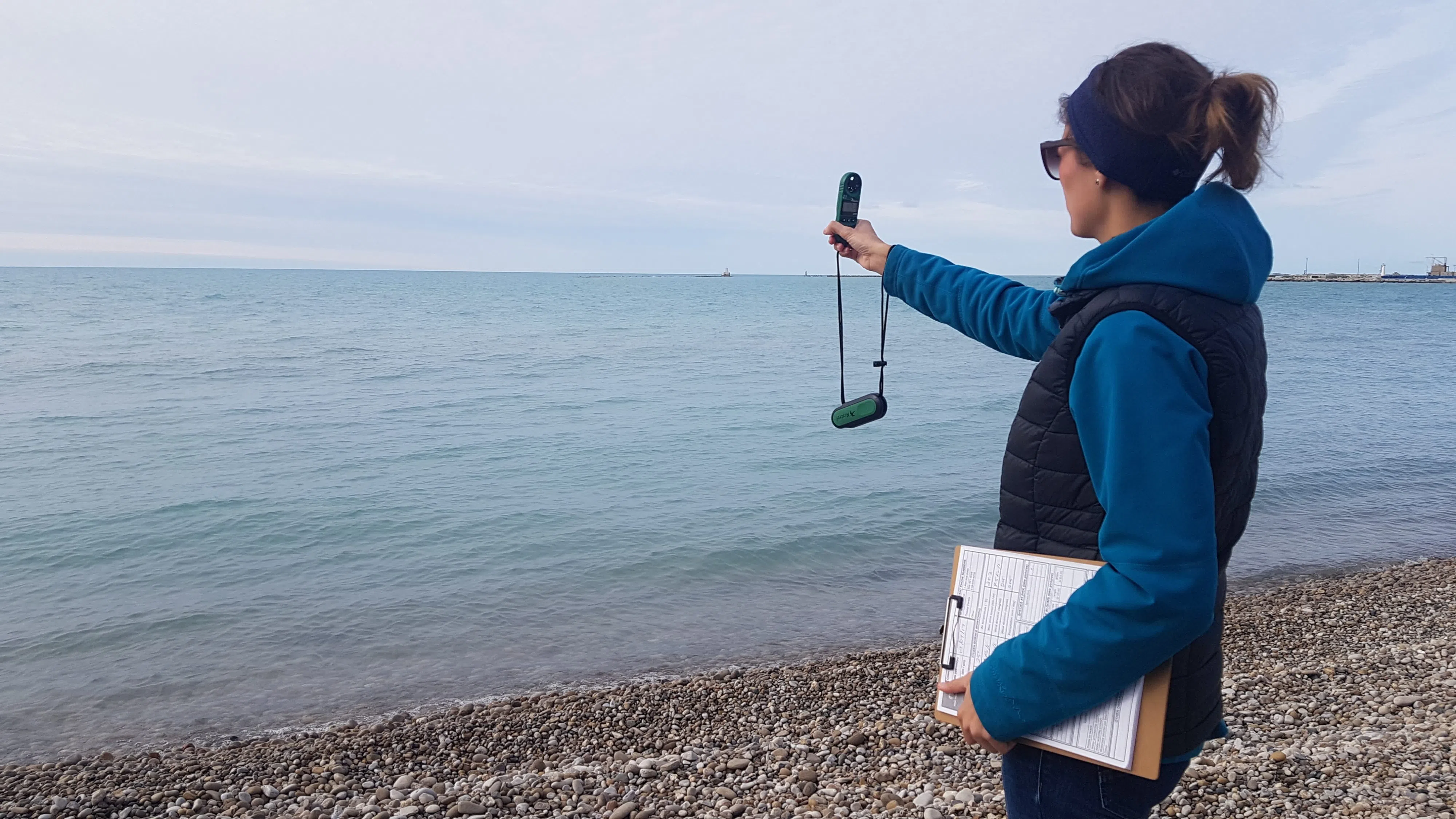
2025 was the 20th year of the Coast Watchers Community Science monitoring program run by the Lake Huron Coastal Centre.
Coast Watchers serve as the “eyes and ears” of Lake Huron’s coastline.
Volunteers work to collect data along the shoreline making it possible to track long-term trends in shoreline conditions and contribute to both short-term sustainability efforts and long-term resiliency goals.
Once again, Coast Watchers collected data along Lake Huron’s vast 6,170 km shoreline—the longest of any Great Lake— from May to October 2025.
They monitored atmospheric conditions, wildlife, algae washups, plastic pollution, human activities, and storm damage.
Over 800 reports were made from volunteers monitoring the Canadian shoreline, all the way from Sarnia, to the Bruce Peninsula.
Among the findings in the 2025 report was learning that the average air and water temperatures collected by Coast Watchers were warmer than the historical average. Due to the known effects of climate change, it is expected that there will continue to be summers with higher temperatures like what was observed in 2025.
Coast Watchers also reported on wildlife observed on the beach, both living and deceased. This year, the most common animal observed by volunteers was a gull, followed by Canadian geese. Also observed were swans, buffleheads, gizzard shad fish, mergansers, turkey vultures, monarch butterflies, cormorants, egrets, minnows, and potentially a piping plover.
Coast Watchers reported 51 deceased or decomposing fish on the shoreline this year, which is over double what was reported last year. The majority of these reports were made from May to July, which corresponds to a gizzard shad fish die off, suggested by fisheries scientists to be due to an outbreak of viral hemorrhagic septicemia (VHS).
Human activity was also tracked, looking at the number of people, cars, and pets on the beach or in the lake through the season.
The busiest beach this year was Saugeen Beach, and the busiest time was July.
66% of vehicles observed on the beach were at Oliphant, which has a unique, gently sloping beach, in which large areas of the lakebed are exposed during low water levels.
Most of the shoreline was monitored in 2025, but there’s a large gap in volunteers reporting from Goderich to Camlachie. The Lake Huron Coastal Centre is actively looking for new volunteers for the Coast Watchers program, especially if you live in Bayfield, Grand Bend, Port Franks, or Kettle and Stony Point First Nation, or frequent these areas of the shoreline.
To become a Coast Watcher, learn more about the program, or read the full report from 2025, visit www.lakehuron/coastwatchers or contact coastwatchers@lakehuron.ca.