


Environment Canada has changed the way it talks about weather alerts.
As of November 26th, it is now using colour codes: yellow orange and red.
Yellow means potentially hazardous weather where impacts are moderate, and are the most common type of alert. For example, a yellow wind warning means the wind might knock down a few branches.
An orange alert means severe weather is likely to cause significant damage, disruption, or health impacts. For example, if it was a wind warning, larger tree branches could come down, and there could be widespread power outages and roof damage. Orange alerts are uncommon.
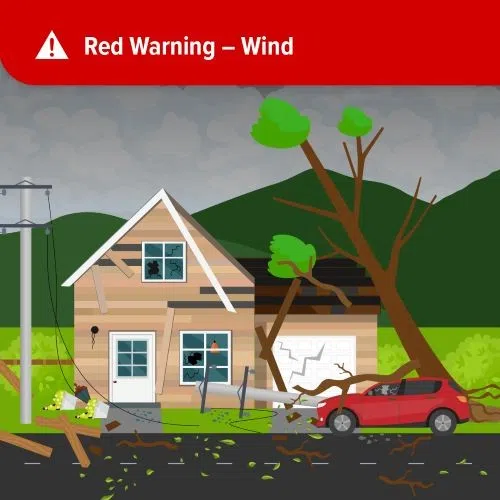
A red alert means there is very dangerous and possibly life-threatening weather that will cause extreme damage and disruption with extensive impacts. For example, wind that causes structural damage, significant tree damage like wiping out a park or orchard and a high likelihood of injury.
Environment Canada says the colours are meant to tell you the level of impact possible in your area, so you can prepare appropriately.
Today, it’s a yellow snow squall warning for northern Grey County and the Bruce Peninsula and an orange snow squall waning for southern Bruce County.