


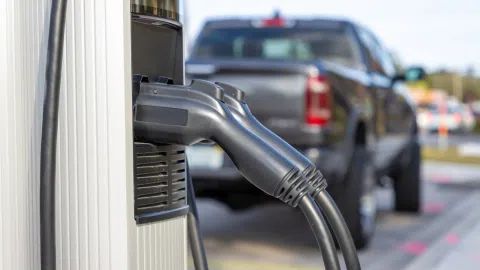
Grey County has secured some federal funding to support a transition to electric fleet vehicles.
It will go towards creating the infrastructure to support eventual electrification some of its smaller vehicles. The plan is to install 20 Level 2 electric vehicle chargers at four County-owned sites.
Deputy CAO Niall Lobley tells Bayshore Broadcasting News, “A lot of the work is actually to do with electrical upgrades which will serve a whole heap or purpose and value in our bases.”
Lobley says Grey County doesn’t have electric vehicles now, and will only consider buying them when their existing vehicles reach they end of their useful life spans. First on the list are two electric half-ton pickup trucks to replace outgoing trucks.
The vehicles will be small, people carrying vehicles, not large public works or maintenance vehicles. Those are still years away.
The transition is funded in part through Natural Resources Canada’s (NRCan) Zero Emission Vehicle Infrastructure Program (ZEVIP). The federal funding will cover about $100,000 or half of the total cost. The County’s half is already accounted for in the 2025 budget.
Lobley says,”These are primarily chargers which are going to be for our smaller vehicles and the smaller vehicles which are running to support our operations. We’re not going to be getting rid of vehicles and putting an electric snowplow on the road anytime soon but certainly this is part of Grey County’s commitment to looking at the ways in which we can more sustainable provide services across Grey County.”
Looking at a bigger, much longer-term picture, when considering other vehicles like a snowplow that a County or municipality might own, Lobley says there are larger electric vehicles that exist, “They’re very, very early and they’re not really all that common necessarily in North America but we’re certainly starting to see across North America things like electric fire engines, we’re seeing electric paramedic and ambulance vehicles coming out into the market. We’re starting to see some EV backhoes and heavy equipment, we’re starting to see the beginning stages of sort of, the larger trucks that we use. But we’re still probably more than a decade away before we’re seeing the technology that would reliably support a transition in operations. So we’re going to be running gas and diesel vehicles as part of our fleet for the foreseeable future.
He adds, “Council has provided clear direction that we’re only going to get EV vehicles when the EV vehicles are there that can do the work that we do. ” Lobley says it will be a mixed fleet over the next few years.
Meanwhile, County Warden Andrea Matrosovs says in a statement, “This infrastructure investment represents a significant step forward in Grey County’s commitment to reducing our corporate greenhouse gas emissions and transitioning our fleet to clean transportation.”
The chargers will be installed at the following locations:
6 chargers at Grey County Administration Building
2 chargers at Ayton Transportation Depot
6 chargers at Chatsworth Transportation Depot
6 chargers at Clarksburg Transportation Depot
The County says the project aligns with its “Going Green in Grey” climate action plan, which includes targets to reduce corporate emissions by 20 per cent by 2026 and to net-zero by 2045. The County says its fleet vehicles account for around 38 per cent of its corporate greenhouse gas emissions.
Construction on the fleet charging stations has begun, following engineering and design work that was completed in June, July & August 2025. The stations are expected to be fully operational by March 31, 2026.